
 EN
EN





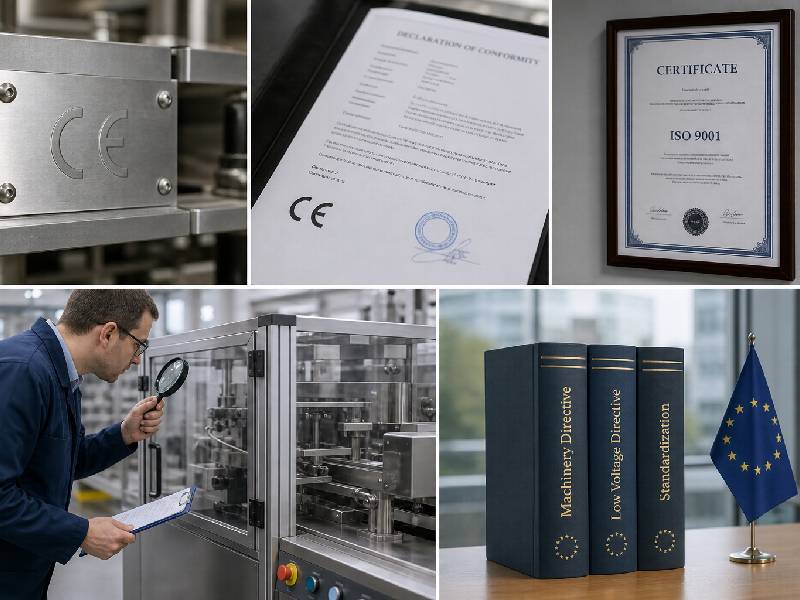
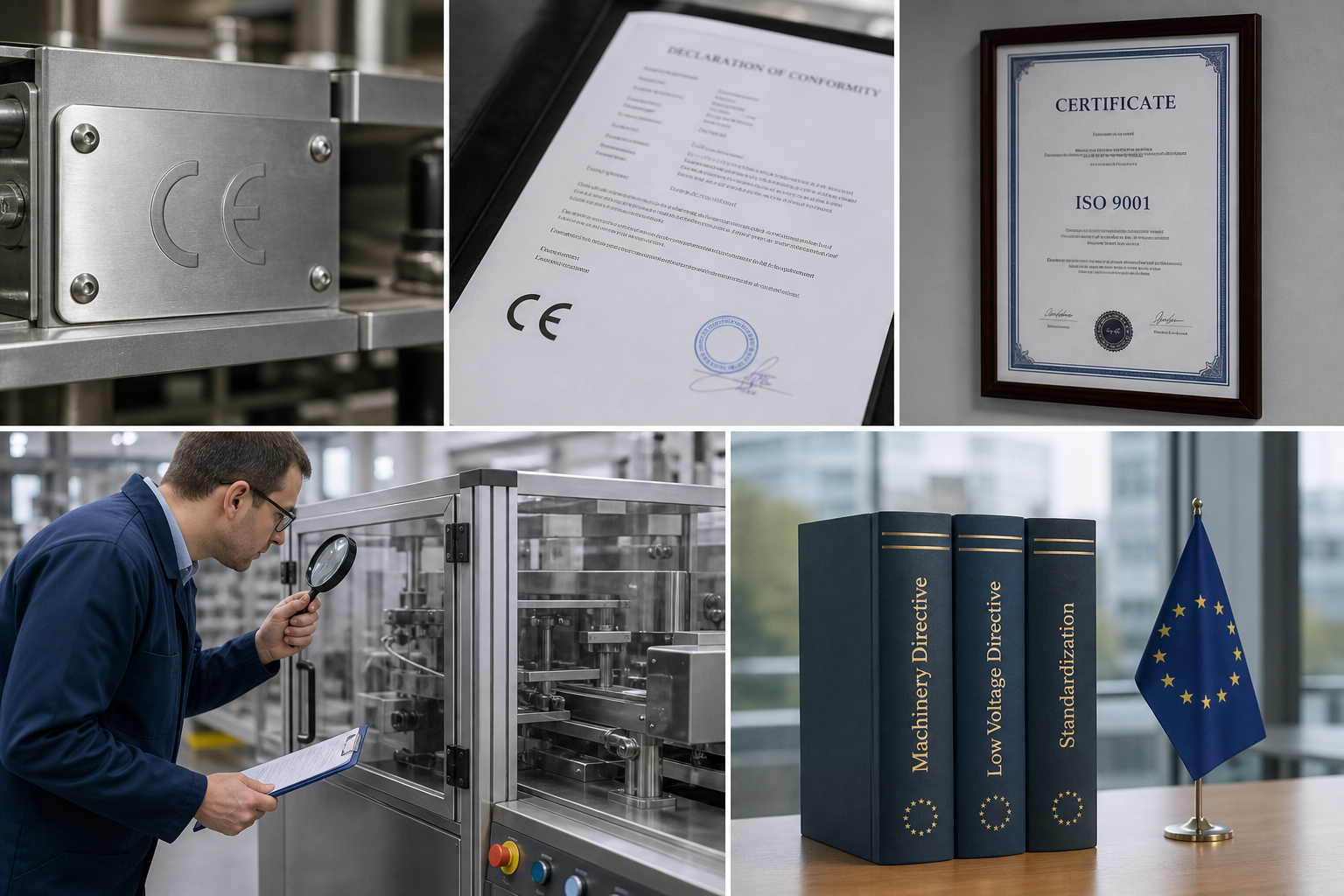
CE marking on a piece of industrial machinery is not a product quality certification — it is a legal declaration by the manufacturer that the machine complies with the applicable EU directives and harmonized standards. For food manufacturers in Europe, or for any business importing food packaging equipment into the EU, the CE mark is a mandatory legal requirement, not an optional quality indicator. Yet the CE marking system is also one of the most frequently misrepresented claims in the Chinese packaging equipment market. This guide explains what CE certification actually requires, how to verify that a machine's CE claim is genuine, and what happens if you import non-CE-compliant machinery.
What CE Certification Actually Requires for Packing Machines
For food packaging machinery, the primary applicable EU directive is the Machinery Directive 2006/42/EC. This directive establishes essential health and safety requirements covering:
• Guarding and safety devices: physical guards to prevent operator contact with moving parts; emergency stop functions
• Electrical systems: compliance with EN 60204-1 (Safety of Machinery – Electrical Equipment of Machines)
• Risk assessment documentation: a documented risk assessment of all identified hazards associated with the machine's operation and foreseeable misuse
• Technical file: a comprehensive technical dossier held by the manufacturer, available for inspection by EU market surveillance authorities
• Declaration of Conformity (DoC): a signed legal document in which the manufacturer declares compliance with all applicable directives
In addition to the Machinery Directive, food packaging equipment may also need to comply with:
• EN 1672-2: Food processing machinery – Basic concepts and hygiene requirements
• EU Regulation 1935/2004: Materials and articles intended to come into contact with food (food-contact compliance)
The Two Types of CE Certification Processes
There is a critical distinction that most buyers do not know: CE marking can be achieved through either self-declaration or third-party certification, depending on the risk level of the machine.
Module A (Self-Declaration): For most standard food packaging machinery (packing machines, filling machines, sealing machines), the manufacturer conducts the conformity assessment internally against the relevant harmonized standards and signs the Declaration of Conformity. No independent third-party body is required for the assessment. The manufacturer holds the Technical File and is liable if the machine is found non-compliant.
Module B + C1 (Third-Party Examination): Required for higher-risk machinery categories. Less common for standard food packaging equipment.
This means a legitimate CE mark on a packing machine does not necessarily involve a third-party test laboratory. What it requires is a complete Technical File and a valid Declaration of Conformity. Suppliers who cannot produce both documents do not have a valid CE mark, regardless of whether the machine has a CE sticker attached.
Verification Checklist: Is the CE Mark Genuine?
When receiving CE documentation from a Chinese packaging machine supplier, verify the following:
| Document | What to Check |
| Declaration of Conformity (DoC) | Manufacturer name and address, machine model and serial number, specific directives cited (must include 2006/42/EC), authorized signatory name, date |
| Technical File (summary) | Ask for a summary index — full Technical File is not normally provided to buyers but should exist |
| CE mark on the machine | Must appear on the machine nameplate with the year of manufacture |
| Risk Assessment evidence | Supplier should be able to confirm a risk assessment exists; ask for confirmation of which EN standards were applied |
Legal Consequences of Importing Non-CE-Compliant Machinery into the EU
Importing machinery without valid CE marking into the EU is a criminal offense in most EU member states, not just a civil regulatory violation. Penalties can include:
• Mandatory removal of the machinery from service
• Seizure of the machinery by customs or market surveillance authorities
• Financial penalties imposed on the importer (not the Chinese manufacturer)
• Personal liability for management of the importing company if an accident occurs while the machine is in service
The importer — not the manufacturer — bears legal liability for CE compliance when goods are placed on the EU market. This means that regardless of what a Chinese supplier claims about CE certification, the importing business must verify the claim before accepting the machine into commercial service.
Tonchant Pack's machines carry verified CE certification under the Machinery Directive 2006/42/EC, with a complete Declaration of Conformity and Technical File available for regulatory inspection. We provide original documentation — not scanned copies — with every shipment to EU markets.
> Ready to verify the CE compliance of your packaging equipment supplier?
> Request original CE documentation from Tonchant Pack →
> Full compliance documentation package provided free of charge with every purchase.