
 EN
EN
Common Coffee Packaging Problems and Solutions: A Practical Guide for Coffee Brands and Buyers
Introduction
For coffee brands, packaging is often the last step before the product reaches customers—but it is also one of the most important steps. A great roast can lose its value quickly if the packaging cannot protect freshness, prevent oxygen exposure, or survive transportation.
Many coffee businesses focus heavily on coffee quality, roasting techniques, and marketing, but overlook packaging performance. In reality, packaging problems can directly affect customer reviews, repeat purchases, and even brand reputation.
From leaking coffee bags and poor sealing performance to inconsistent filling weights and short shelf life, coffee packaging problems are common challenges faced by roasters, distributors, and importers worldwide.
At the same time, many issues are not caused by the coffee itself. They are often related to unsuitable materials, incorrect bag structures, poor production processes, or improper machine settings.
This guide explains the most common coffee packaging problems, practical coffee packaging solutions, and key considerations when sourcing coffee packaging from a professional supplier.
1. Understanding Coffee Packaging Solutions
Coffee packaging has evolved significantly over the past decade. Traditional simple bags have been replaced by high-barrier packaging designed to protect aroma, improve convenience, and support premium branding.
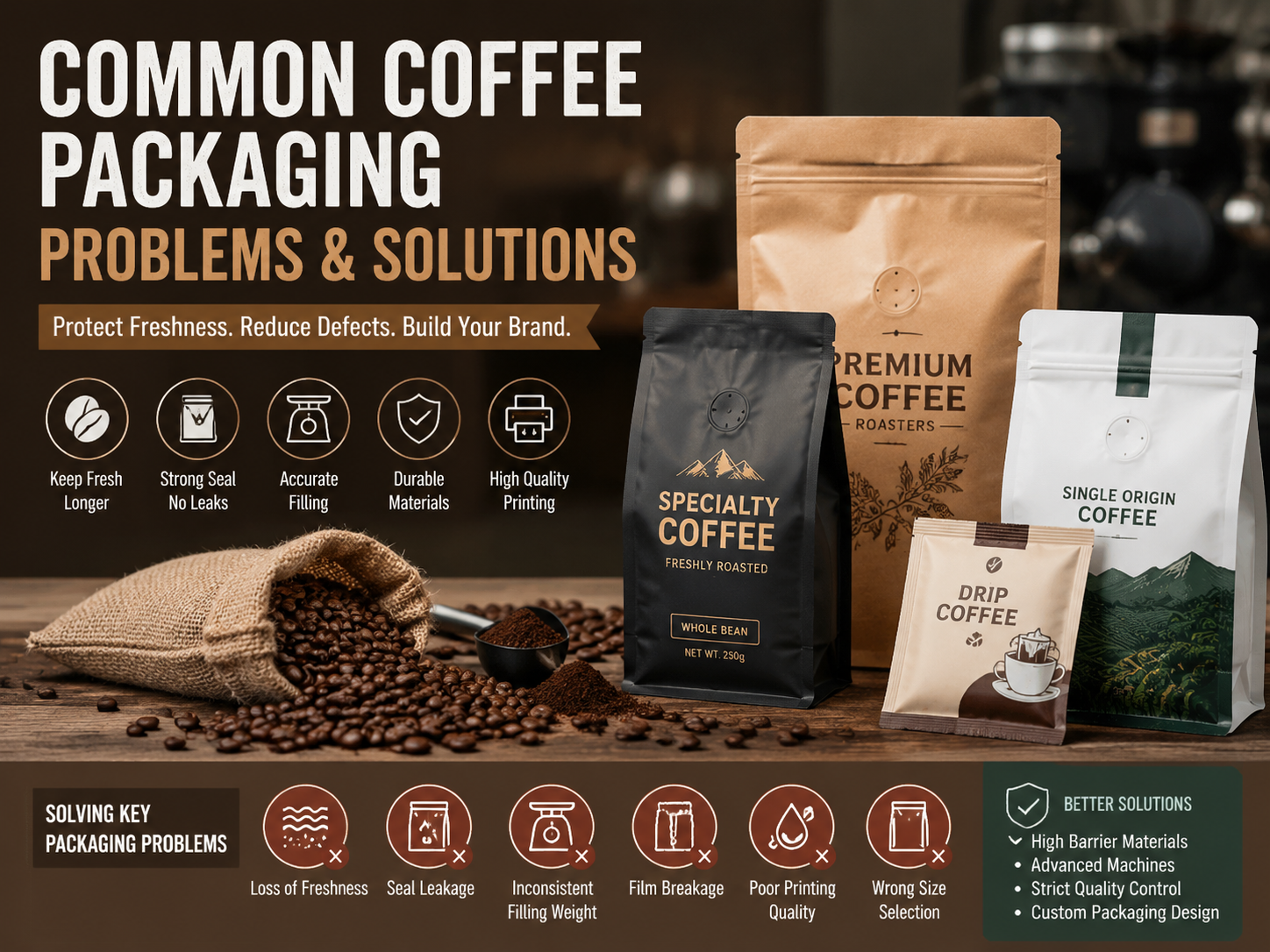
Today, coffee brands commonly use several packaging formats:
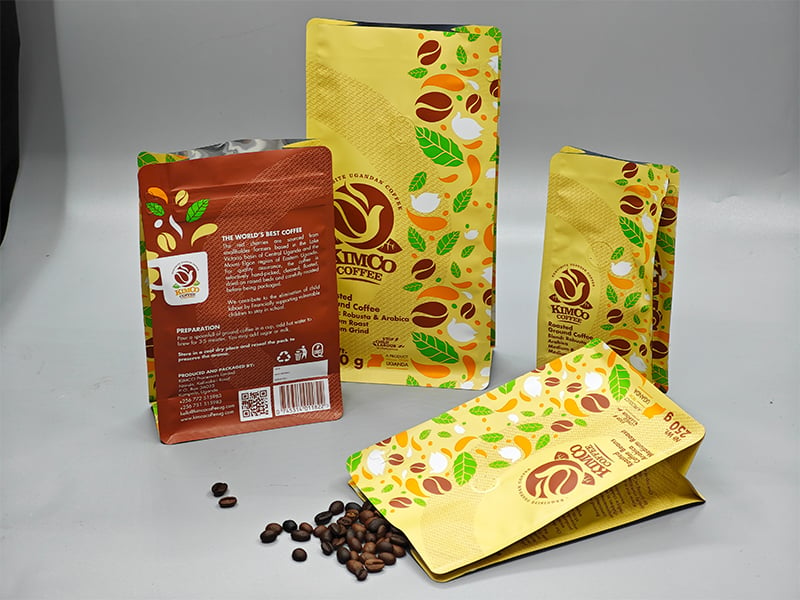
Coffee Bags
Coffee bags remain the most popular packaging option for roasted coffee beans and ground coffee.
Common styles include:
-
Flat bottom bags
-
Stand-up pouches
-
Side gusset bags
-
Quad seal bags
-
Vacuum coffee bags
Most modern coffee bags include functional features such as:
-
One-way degassing valves
-
Zippers
-
Tear notches
-
Custom printing
-
Matte or glossy finishes
For example, a specialty coffee roaster selling freshly roasted beans online may choose a matte flat bottom bag with a valve and zipper because it provides premium shelf appeal while maintaining freshness during delivery.
Drip Coffee Packaging
Single-serve coffee has become increasingly popular because consumers want convenience without sacrificing quality.
A typical drip coffee package includes:
-
Drip filter bag
-
Individual aluminum or laminated outer pouch
-
Paper box or display packaging
This format is widely used by:
-
Specialty coffee companies
-
Hotel suppliers
-
Office coffee providers
-
Subscription coffee brands
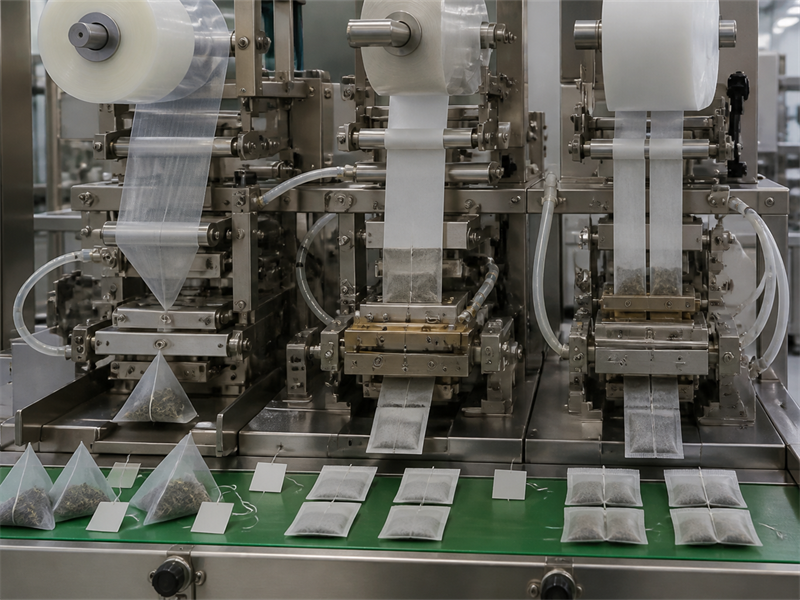
The biggest challenges are maintaining filter strength, ensuring clean sealing, and protecting coffee aroma throughout the supply chain.
Coffee Capsules and Pods
Coffee capsule packaging requires precise manufacturing because even small sealing problems can impact shelf life.
Important requirements include:
-
Excellent barrier properties
-
Accurate filling volume
-
Reliable sealing
-
Compatibility with brewing machines
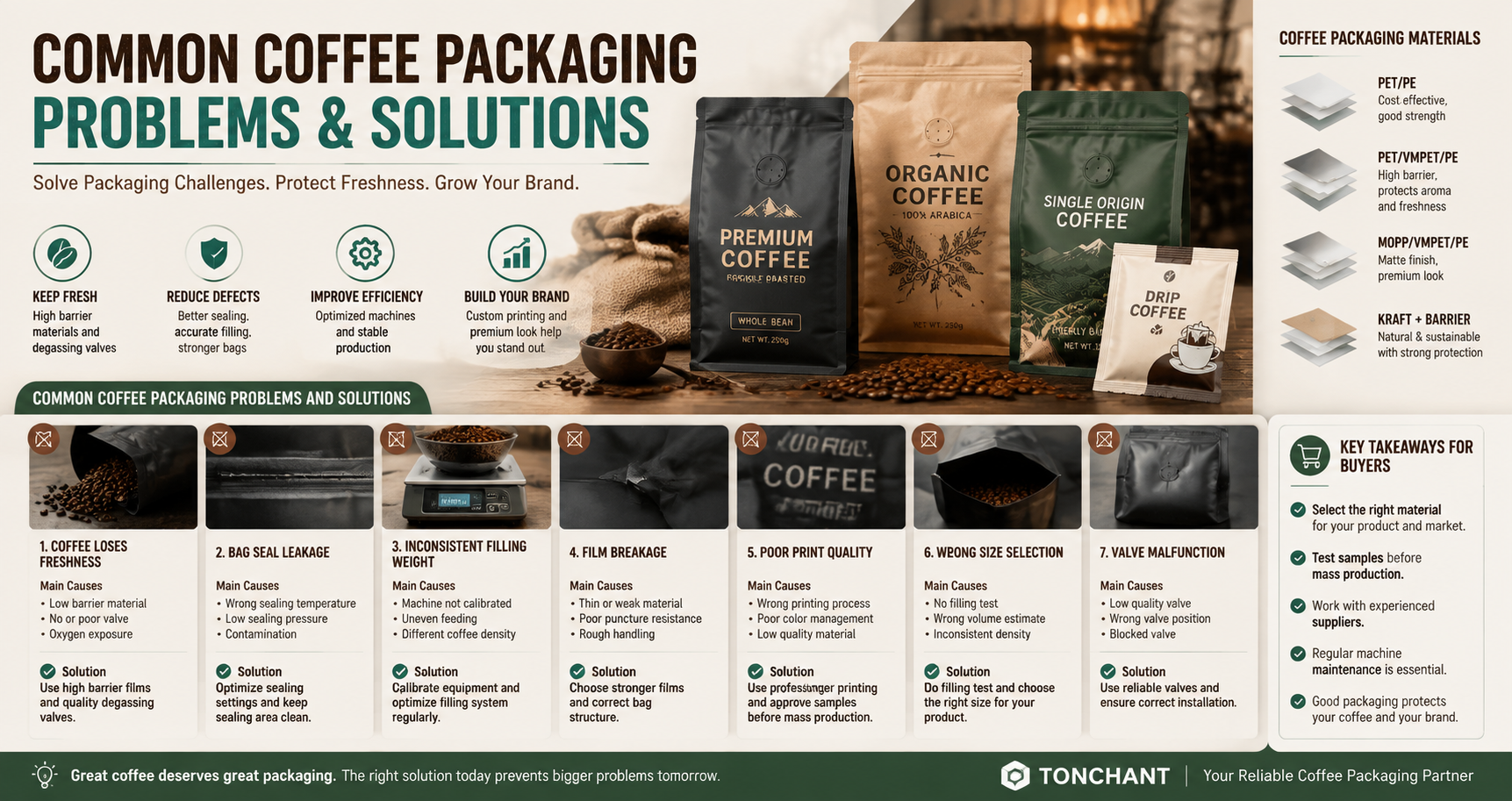
2. Common Coffee Packaging Problems and Practical Solutions
Problem 1: Coffee Loses Freshness Too Quickly
One of the most common complaints from coffee brands is that their product does not taste as fresh after a few weeks.
Typical symptoms:
-
Weak aroma
-
Flat flavor profile
-
Short shelf life
-
Customers saying the coffee tastes “old”
Why does this happen?
Coffee continues releasing carbon dioxide after roasting. At the same time, oxygen exposure causes oxidation, which slowly damages coffee flavor.
Common causes include:
-
Low-barrier packaging film
-
Missing degassing valve
-
Poor sealing quality
-
Excess oxygen trapped inside the bag
Solution: Choose High-Barrier Coffee Packaging Materials
A professional coffee package needs to block:
-
Oxygen
-
Moisture
-
Light
-
External odors
Popular structures include:
-
PET/AL/PE
-
PET/VMPET/PE
-
MOPP/VMPET/PE
-
Kraft paper with barrier layers
At Tonchant, we work with coffee brands that have different shelf-life requirements, from small specialty roasters to large commercial suppliers. In many cases, the biggest improvement comes not from changing the coffee itself, but from selecting a better packaging structure.
For premium roasted coffee, combining high-barrier film with a quality one-way valve is usually the most effective solution.
Problem 2: Coffee Bag Sealing Failure
A coffee bag may look perfect after production but fail during transportation. Leakage issues are among the most frustrating coffee packaging defects because they often appear after the product has already left the factory.
Common symptoms:
-
Air enters the package
-
Bags lose their shape
-
Coffee freshness decreases
-
Product returns increase
Main causes:
-
Incorrect sealing temperature
-
Insufficient sealing pressure
-
Coffee powder contamination around the seal area
-
Poor-quality packaging film
Solution: Improve Sealing Control
Manufacturers should carefully control:
-
Temperature settings
-
Sealing pressure
-
Production speed
-
Film compatibility
For buyers sourcing coffee bags overseas, it is important to request production samples before placing a large order.
A low-cost bag may appear attractive initially, but poor sealing performance can create much higher costs later through product waste and customer complaints.
Problem 3: Inconsistent Coffee Filling Weight
Coffee brands often discover filling problems when they move from manual packing to automated production.
For example, a small roaster may manually fill 250g coffee bags without problems. However, after switching to a packaging machine, they may notice weight differences between bags.
Why does this happen?
Coffee characteristics change depending on:
-
Bean size
-
Roast level
-
Grind size
-
Density
Dark roasted beans usually occupy more space than lighter roasted beans of the same weight.
Solution: Optimize Filling Equipment
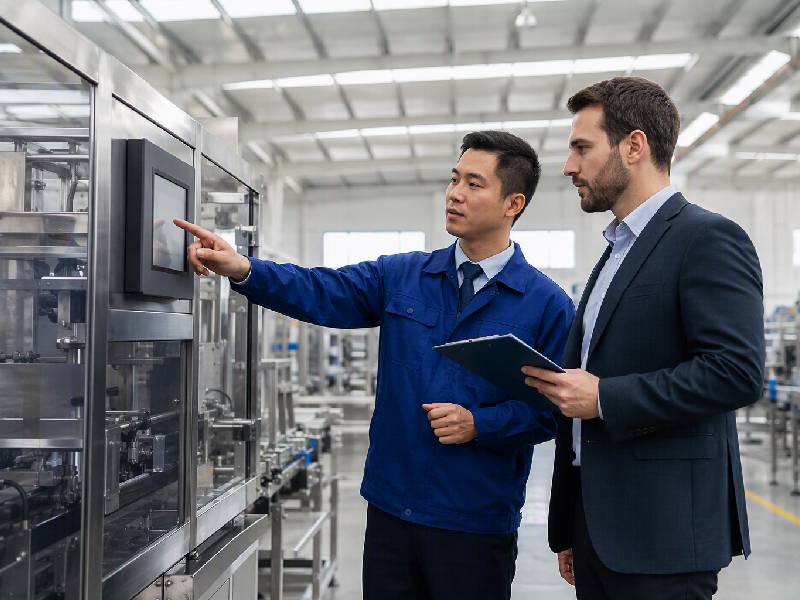
Proper machine setup is essential.
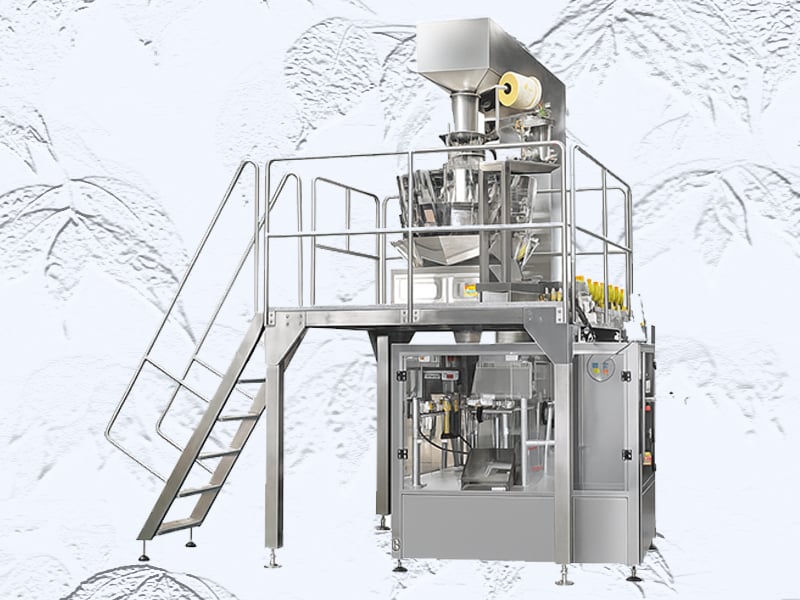
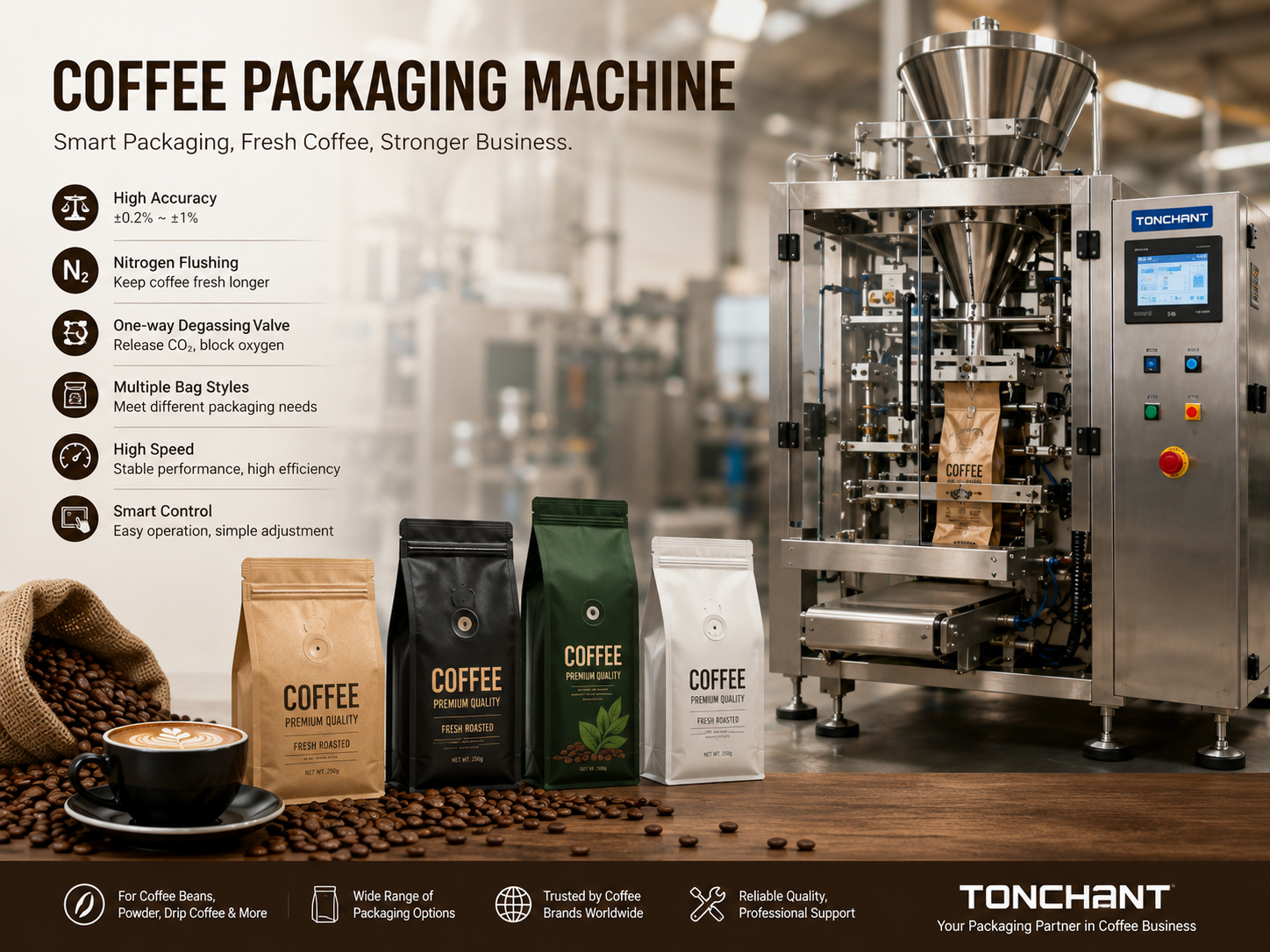
Common coffee packaging machine troubleshooting solutions include:
| Problem | Possible Solution |
|---|---|
| Incorrect filling weight | Calibrate weighing system |
| Coffee powder blockage | Adjust feeding system |
| Slow production speed | Optimize machine parameters |
| Excess coffee dust | Improve extraction system |
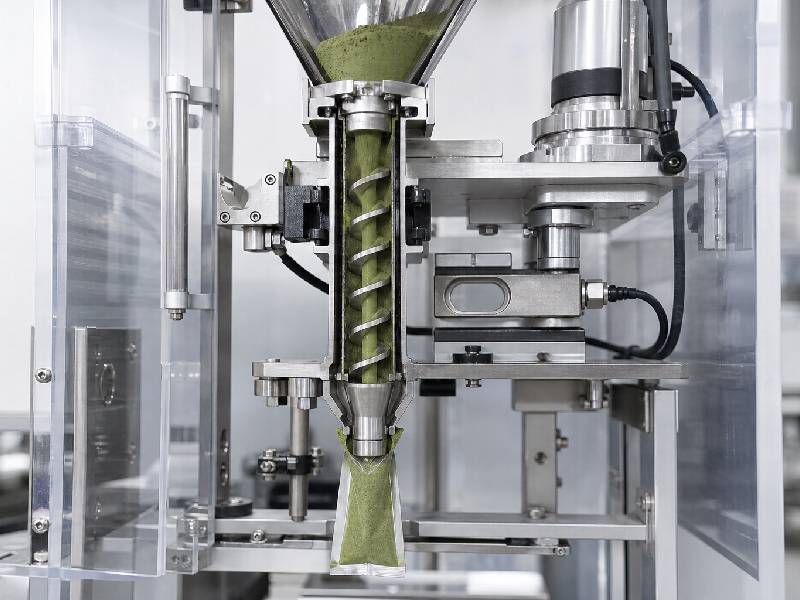
Different coffee products require different filling technologies:
-
Auger fillers for coffee powder
-
Weighing fillers for coffee beans
-
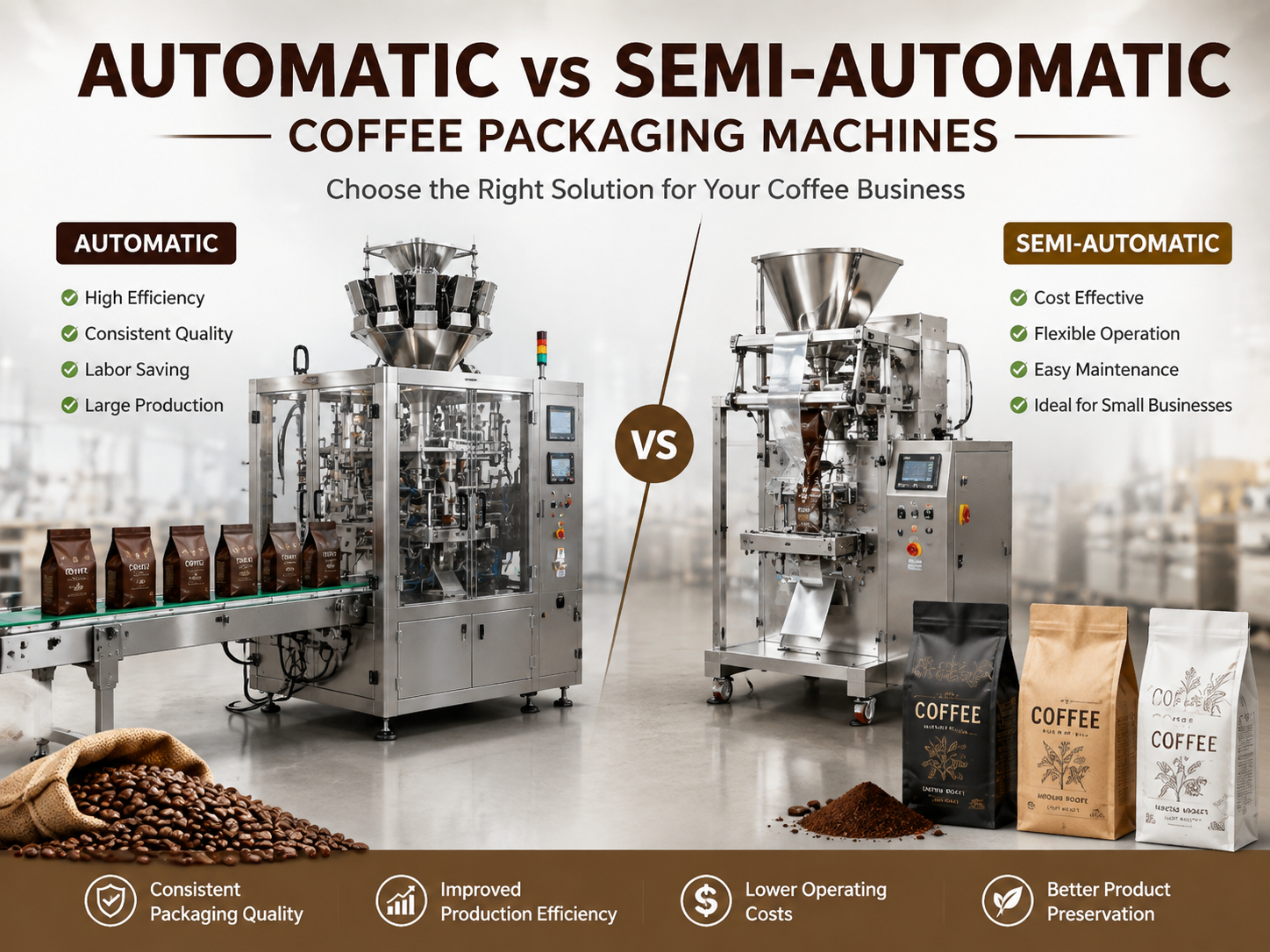
Automatic filling lines for high-volume production
Experienced packaging suppliers should help customers match the right machine and bag design.
Problem 4: Coffee Packaging Material Breakage
A coffee bag may perform well inside the factory but fail during shipping.
This is especially common for brands exporting internationally.
Causes include:
-
Film thickness too low
-
Weak laminate structure
-
Poor puncture resistance
-
Incorrect bag size selection
A 1kg coffee bag shipped across continents requires stronger material than a small 250g retail pouch sold locally.
Solution: Select Materials Based on Real Usage
Packaging selection should consider:
-
Product weight
-
Transportation distance
-
Storage environment
-
Retail requirements
For example:
| Coffee Product | Recommended Packaging |
|---|---|
| Premium roasted beans | PET/VMPET/PE |
| Organic coffee | Kraft barrier bags |
| Ground coffee | High oxygen barrier films |
| Drip coffee | Filter + high-barrier outer pouch |
Problem 5: Printing and Appearance Issues
Coffee packaging is not only functional—it is also a marketing tool.
A customer often judges coffee quality before tasting it.
Common printing problems:
-
Incorrect colors
-
Blurry artwork
-
Ink peeling
-
Poor finishing
These issues can make even excellent coffee appear less professional.
Solution: Work With Experienced Packaging Manufacturers
When sourcing custom coffee packaging, buyers should check:
-
Printing capability
-
Color management process
-
Sample approval system
-
Previous coffee packaging experience
For large-volume orders, gravure printing is commonly preferred because it provides stable colors and consistent quality.
For startups testing new products, digital printing can be a practical option because it supports lower MOQ.
3. Coffee Packaging Materials: What Buyers Need to Know
Choosing materials is one of the most important decisions when solving coffee packaging problems.
Plastic Laminated Films
PET/PE
Advantages:
-
Good strength
-
Affordable
-
Good printability
Suitable for standard coffee products.
PET/VMPET/PE
Advantages:
-
Excellent barrier protection
-
Blocks light exposure
-
Suitable for longer shelf life
Commonly used for premium coffee.
MOPP/VMPET/PE
Advantages:
-
Premium matte appearance
-
Strong barrier performance
-
Popular among specialty coffee brands
Kraft Coffee Bags
Kraft packaging has become popular because consumers associate it with natural and sustainable products.
However, kraft paper alone does not provide enough protection.
Most coffee kraft bags include:
-
Paper outer layer
-
Barrier film inside
-
Heat-sealing layer
Drip Coffee Filter Materials
Common options include:
-
Wood pulp filter paper
-
PLA biodegradable mesh
-
Nylon mesh
-
Non-woven fabric
Selection depends on:
-
Brewing speed
-
Filtration quality
-
Sustainability goals
4. Applications Across Different Coffee Businesses
Different buyers have different packaging priorities.
Specialty Coffee Roasters
Focus on:
-
Premium appearance
-
Freshness protection
-
Brand storytelling
Typical choice:
Custom printed bags with valves.
Coffee Chains
Focus on:
-
Stable supply
-
Cost control
-
Packaging consistency
Typical choice:
Large-volume customized production.
Online Coffee Brands
Focus on:
-
Attractive design
-
Flexible MOQ
-
Shipping durability
Typical choice:
Stand-up pouches and flat bottom bags.
Coffee Importers and Distributors
Focus on:
-
Competitive pricing
-
Reliable delivery
-
Quality consistency
Typical choice:
Long-term packaging supply partnerships.
5. Advantages of Professional Coffee Packaging Solutions
A well-designed packaging system provides several benefits:
Longer Shelf Life
Better barrier materials help maintain coffee aroma and flavor.
Lower Product Loss
Reducing sealing failures and material defects means fewer customer complaints.
Stronger Brand Image
Custom packaging helps coffee brands compete in crowded markets.
Improved Production Efficiency
Automation reduces labor dependency and improves consistency.
Tonchant’s factory experience shows that many packaging challenges can be prevented before production begins. By reviewing coffee type, filling method, packaging size, and transportation conditions early, suppliers can recommend solutions that avoid costly adjustments later.
6. Coffee Packaging Customization Options
Modern coffee brands can customize almost every part of their packaging.
Bag Structure
Options include:
-
Flat bottom bags
-
Stand-up bags
-
Side gusset bags
-
Vacuum bags
-
Drip coffee bags
Printing Options
Available customization:
-
Logo
-
Brand colors
-
Product information
-
Barcode
-
Certifications
Functional Features
Popular additions:
-
Degassing valve
-
Zipper
-
Tear notch
-
Window
-
Handle
Sustainable Packaging
Growing demand has increased interest in:
-
Recyclable packaging
-
Compostable materials
-
Reduced plastic solutions
However, buyers should carefully evaluate sustainability claims and verify certifications before selecting eco-friendly materials.
7. MOQ and Lead Time Considerations
MOQ
Minimum order quantity depends on:
-
Material structure
-
Printing method
-
Packaging size
-
Customization requirements
Typical ranges:
| Product Type | MOQ |
|---|---|
| Stock bags | 500-1,000 pcs |
| Custom printed bags | 5,000-10,000 pcs |
| Custom boxes | 1,000+ pcs |
| Drip coffee packaging | 10,000+ pcs |
For new brands, starting with digital printing or stock packaging can reduce initial investment.
Lead Time
Typical timeline:
| Process | Time |
|---|---|
| Artwork confirmation | 3-7 days |
| Sample production | 7-15 days |
| Mass production | 20-35 days |
International buyers should also consider shipping time and customs clearance.
8. Coffee Packaging Certificates
Professional coffee packaging suppliers should provide relevant compliance documents.
Common certifications include:
Food Safety
-
FDA compliance
-
EU food contact compliance
-
LFGB testing
-
SGS reports
Sustainability
-
FSC
-
EN13432
-
Compostability certifications
Factory Management
-
ISO9001 quality system
Certificates are especially important for buyers supplying European and North American markets.
9. Coffee Packaging Problems Comparison Table
| Problem | Cause | Business Impact | Solution |
|---|---|---|---|
| Coffee loses aroma | Poor barrier material | Reduced customer satisfaction | Upgrade packaging film |
| Bag leakage | Seal failure | Product waste | Improve sealing process |
| Wrong filling weight | Machine settings | Customer complaints | Calibrate equipment |
| Bag tearing | Weak material | Shipping damage | Select stronger structure |
| Printing defects | Poor production control | Weak brand image | Use experienced supplier |
| Short shelf life | Oxygen exposure | Lower sales value | Add valve and barrier layer |
10. FAQ About Coffee Packaging Problems
Why does coffee need a degassing valve?
Freshly roasted coffee releases carbon dioxide. A one-way valve allows gas to escape while preventing oxygen from entering.
What is the best coffee packaging material?
There is no single best material. The right choice depends on coffee type, shelf life, market, and budget.
Premium coffee brands usually choose high-barrier laminated structures.
How can I reduce coffee packaging defects?
The most effective approach is:
-
Choose suitable materials
-
Test samples
-
Confirm machine compatibility
-
Work with experienced suppliers
Why does my coffee packaging machine have problems?
Common reasons include:
-
Incorrect settings
-
Poor maintenance
-
Product density changes
-
Unsuitable packaging size
Regular inspection and proper machine adjustment can prevent many issues.
Can small coffee brands order customized packaging?
Yes. Many suppliers now offer lower MOQ options through digital printing and flexible production solutions.
Conclusion
Coffee packaging is not simply a container—it is part of the product experience.
From protecting aroma to improving production efficiency, the right packaging solution can directly influence a coffee brand’s success.
The most common coffee packaging problems usually come from three areas:
-
Incorrect material selection
-
Poor packaging design
-
Improper production processes
By understanding these challenges and working with an experienced supplier, coffee companies can reduce coffee packaging defects, improve product quality, and build stronger brands.
At Tonchant, we have supported coffee businesses worldwide with customized coffee bags, drip coffee packaging, and packaging solutions tailored to different markets. From material selection to final production, the goal is always the same: helping brands deliver fresher coffee with packaging that performs.