
 EN
EN
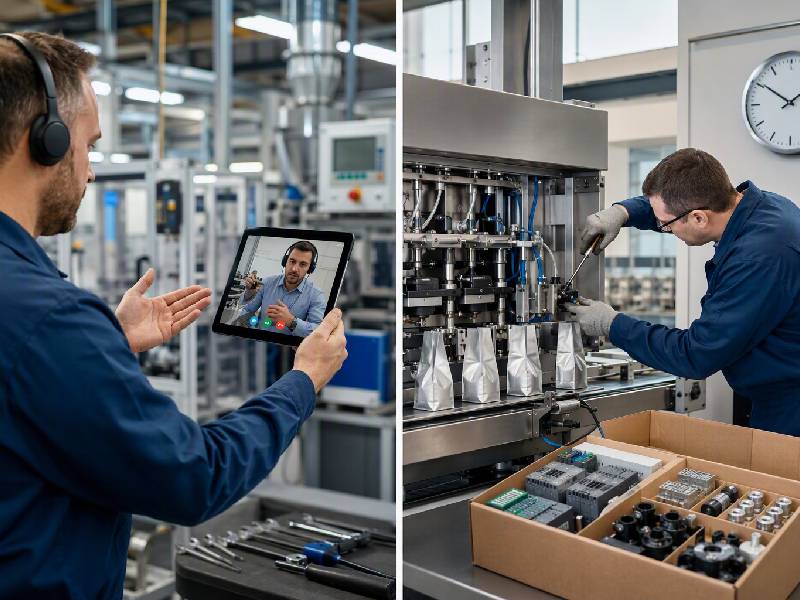
Every packaging machinery purchase decision ultimately includes a bet on after-sales support. Machines break down. Sealing elements wear out. PLC programs need adjustment when product density changes with the harvest season. Operators need retraining when staff turns over. The question is not whether you will need after-sales support, but whether your supplier is structured and resourced to provide it. For international buyers purchasing packaging equipment from China, the after-sales relationship is complicated by time zone differences, language barriers, and the inability to have a technician on-site in minutes. This guide defines what effective after-sales support looks like and provides a framework for evaluating supplier capability before purchase.
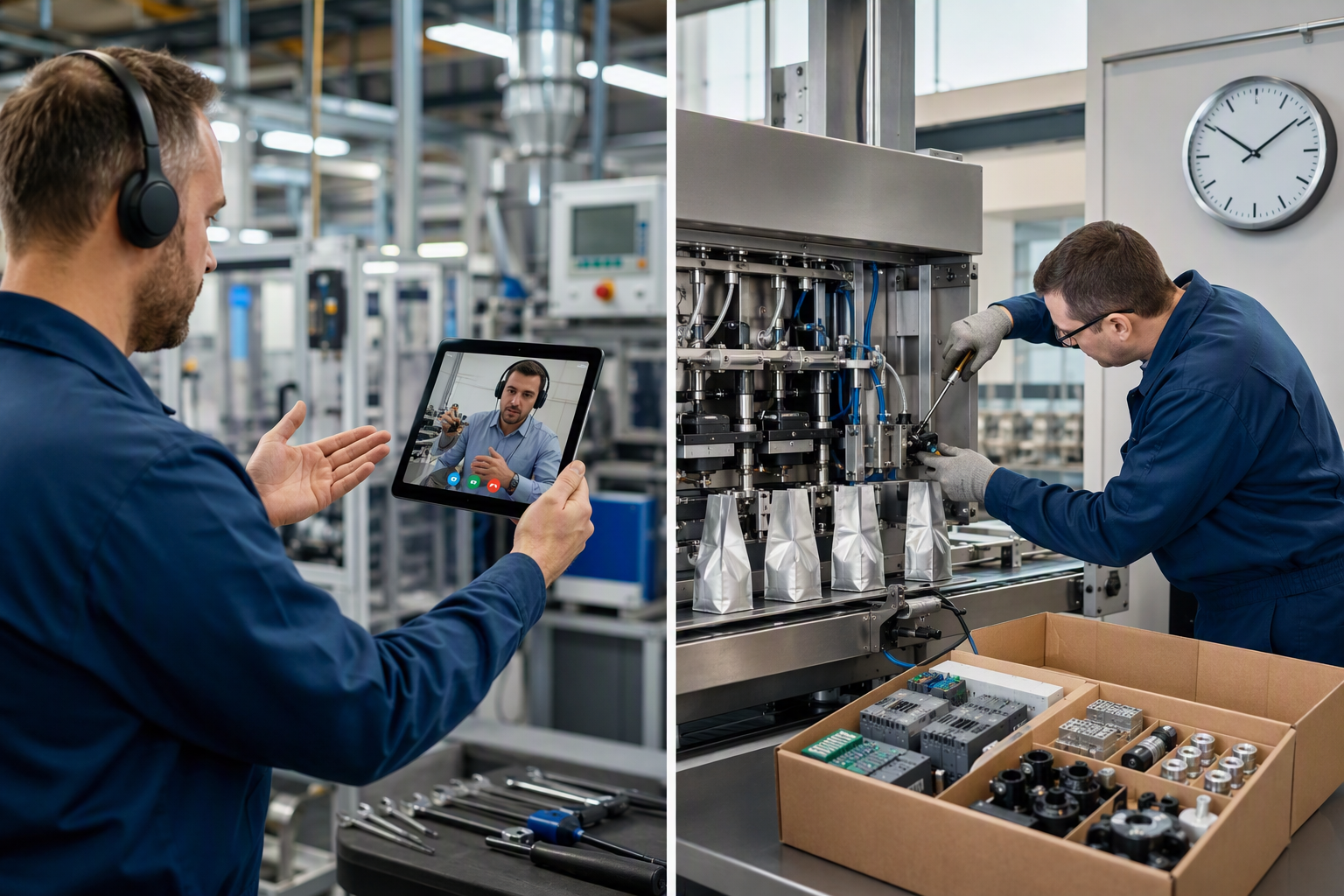
The Five Components of Effective After-Sales Support
1. Warranty Terms: What Is Actually Covered
The industry standard warranty for packaging machinery is:
• 1 year full machine warranty: all parts and labor for defects attributable to manufacturing or materials
• 2-year warranty on core components: servo motors, PLC units, and control system electronics, which have longer life expectancies than consumable parts but higher replacement costs
Red flags in warranty language:
• "Warranty does not cover normal wear and tear" without defining what that means — this can be used to exclude a wide range of actual defects
• Warranty requires the buyer to ship the defective part back to China before a replacement is dispatched — this creates unacceptable downtime for a production facility
Best practice: agree in writing that for warranty claims, the replacement part will be dispatched first and the defective part returned within 30 days, where the value of the part warrants it.
2. Response Time SLA for Technical Support
Response time SLA (service level agreement) is the documented commitment from the supplier to respond to technical support requests within a defined timeframe. The relevant metrics are:
• Initial response time: the time from a support ticket or message being submitted to a technically qualified response — industry benchmark is 2–4 hours for urgent issues
• Solution provision time: the time from initial response to a documented solution or diagnosis — benchmark is 24 hours for standard issues, 48 hours for complex diagnoses
• Escalation process: what happens if the initial support team cannot resolve the issue — is there a senior engineer available, and how quickly?
Tonchant's after-sales team operates on a 24/7 basis with a documented 2-hour initial response SLA and a 24-hour solution delivery target for standard technical issues.
3. Spare Parts Availability and Delivery
The operational risk of a spare parts shortage is not the cost of the part — it is the cost of production downtime while waiting for the part. A machine producing 2,000 bags/hour that sits idle for 5 days waiting for a sealing element costs the business far more than the part itself.
Key questions to ask any packaging machinery supplier:
• "What is your inventory level for the fastest-wearing consumable parts on this model?"
• "What is your standard international shipping timeline for spare parts to my country?"
• "How long will you guarantee spare parts supply for this model after purchase?"
Tonchant Pack maintains a dedicated spare parts inventory and ships internationally within 3–7 business days. We provide a lifetime spare parts supply commitment — at cost price — for every machine we sell.
4. Remote Troubleshooting Capability
Modern packaging machinery with PLC control systems can be diagnosed remotely via video call in a large proportion of fault scenarios. Effective remote support requires:
• The supplier's technician to have access to the same model PLC program and electrical schematics used in your machine
• A capable English-language (or your language) technical support contact — not just a sales contact who relays messages to an engineering team
• Willingness to conduct video calls during your local business hours, not only China business hours
5. Operator Training Documentation
Comprehensive operator training materials — including installation videos, operation manuals, and maintenance schedules — should be provided in your language before the machine ships. Training delivered only at installation and not documented creates a long-term dependency on the supplier that limits your operational independence.
> Ready to evaluate your packaging machinery supplier's after-sales capability?
> Download Tonchant Pack's after-sales service commitment — and compare against your current supplier →
> Lifetime spare parts. 24/7 support. 2-hour response SLA.