
 EN
EN


Common Problems in Coffee Capsule Filling
Common Problems in Coffee Capsule Filling: Troubleshooting for B2B Production
Introduction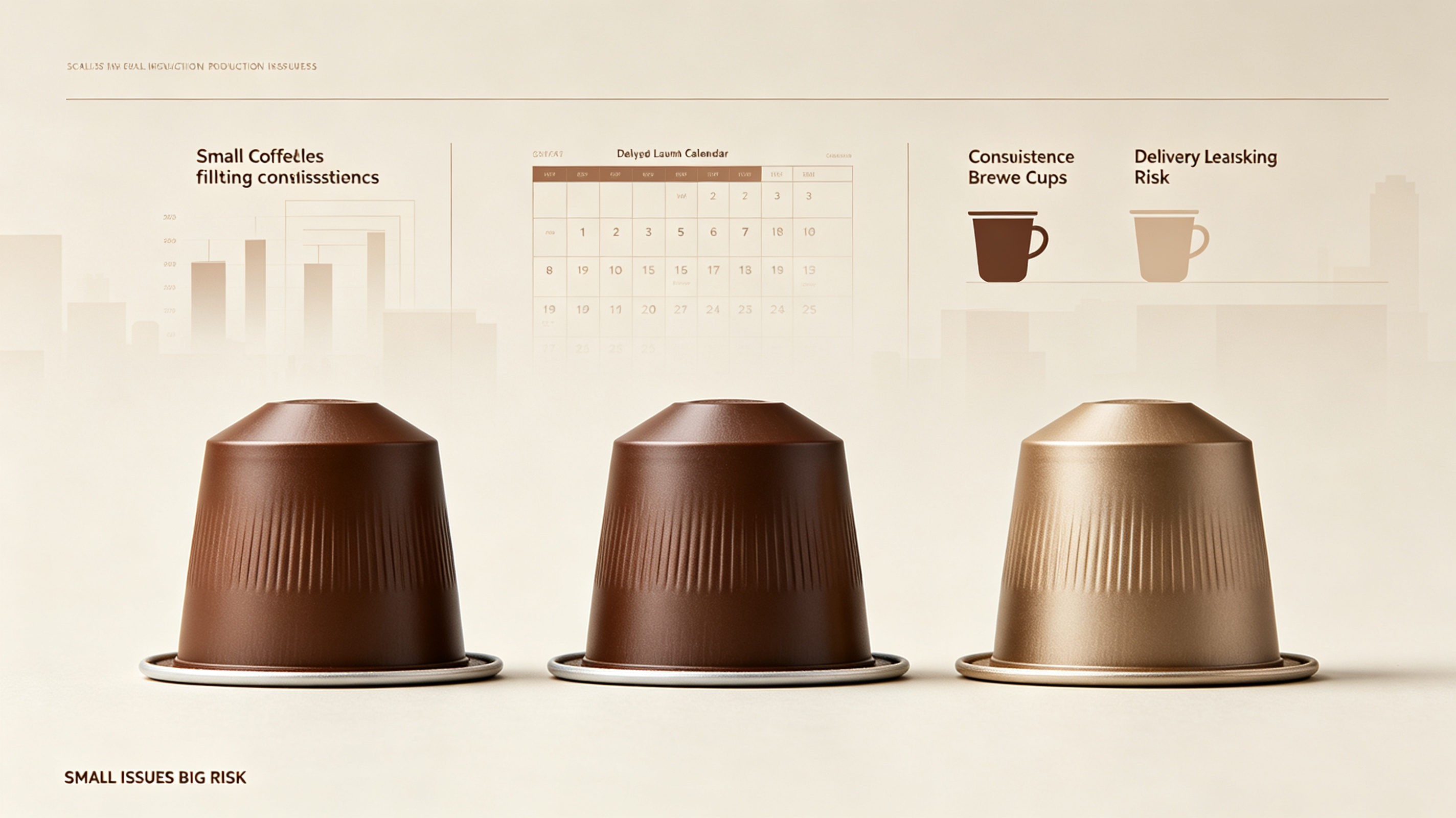
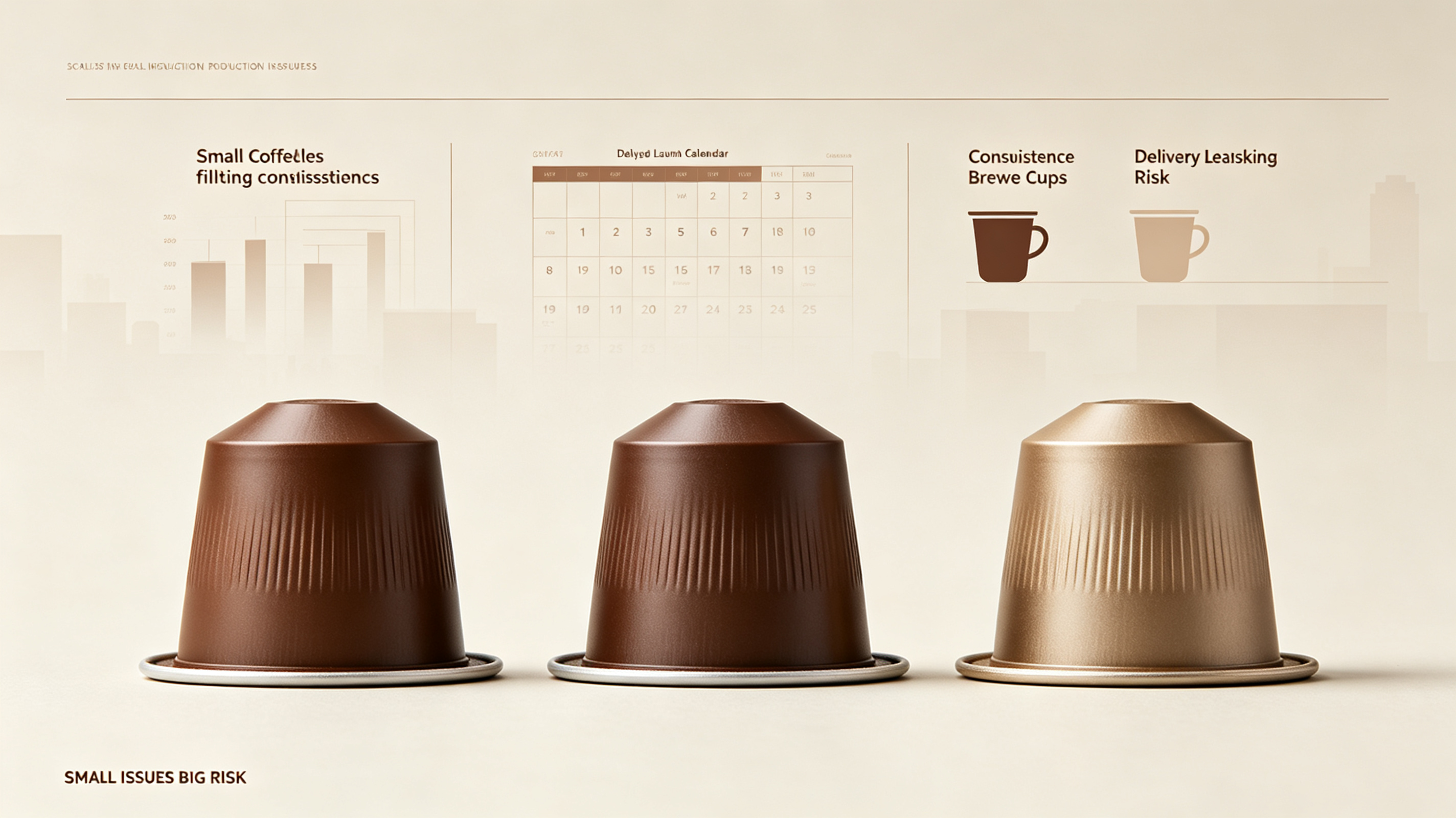
For restaurant chains, food delivery brands, wholesale distributors, and sustainability-focused packaging buyers, coffee capsule production success hinges on consistent filling quality. Many B2B operators assume that once their capsule filling machine is set up, mass production will run smoothly. In practice, coffee capsule filling problems are one of the top causes of batch waste, delayed launches, inconsistent brew quality, and unwanted customer complaints.
Small filling inconsistencies that seem trivial in lab testing scale rapidly into costly issues in commercial production. Uneven dosing leads to weak or over-extracted coffee across hotel and restaurant locations. Poor sealing creates leaky capsules that fail during delivery and subscription box shipping. Material mismatches and uncalibrated machine settings result in high defect rates, excess inventory waste, and even invalidated sustainability certifications for eco-friendly product lines.
Having supported hundreds of B2B production projects, the Tonchant Earth team has resolved nearly every common filling failure across aluminum, plastic, and compostable capsule formats. We regularly help wholesalers stabilize high-volume runs, assist hospitality brands in standardizing cross-location beverage quality, and guide sustainable buyers through material-specific filling challenges that most generic machine troubleshooting guides overlook.
This article breaks down real-world coffee capsule filling problems, their root operational causes, practical fixes, industry-specific use cases, and a complete B2B buying and troubleshooting guide tailored for commercial packaging buyers.
What Are Coffee Capsule Filling Problems?
Coffee capsule filling problems refer to recurring production defects that occur during the dosing, tamping, sealing, and post-processing stages of single-serve capsule manufacturing. Unlike minor cosmetic flaws, these issues directly impact product functionality, shelf stability, supply chain durability, and end-consumer brew experience.
In commercial B2B settings, filling errors extend far beyond simple “underfilled or overfilled” capsules. They include inconsistent powder dosing, uneven tamping density, incomplete heat sealing, lid delamination, post-filling powder residue, humidity-related material failure, and machine calibration drift over long production runs.
What makes these issues uniquely challenging for B2B buyers is their compounding effect. A 3% defect rate in small-batch testing can balloon to 15–20% waste during high-speed commercial filling, especially when switching between capsule materials or adjusting line speeds for large wholesale orders. Many buyers also overlook a critical variable: filling behavior changes drastically across aluminum, multi-layer plastic, and plant-based compostable capsules. A machine setting that works flawlessly for plastic capsules can cause consistent sealing failure on compostable variants.
Tonchant Earth’s pre-production trial process specifically tests material-to-machine compatibility before full-scale runs, eliminating hidden filling errors that only surface during commercial volume production.
Key Benefits of Fixing Filling Issues at the Source
Resolving core coffee capsule filling problems does more than reduce factory waste. It stabilizes your entire commercial coffee program, protects brand reputation, and improves long-term supply chain profitability. Below are the most impactful operational benefits for B2B buyers, paired with a comparative overview of problem severity across capsule materials.
|
Filling Problem
|
Aluminum Capsule Risk
|
Plastic Capsule Risk
|
Compostable Capsule Risk
|
Core Business Benefit After Fixing
|
|---|---|---|---|---|
|
Inconsistent dosing & tamping
|
Medium
|
Medium
|
High
|
Uniform brew strength across multi-location hospitality & retail
|
|
Incomplete heat sealing
|
Low
|
Medium
|
Very High
|
Zero transit leakage for delivery & subscription packaging
|
|
Post-run powder residue contamination
|
Medium
|
Medium
|
High
|
Stable food safety compliance for cross-border wholesale distribution
|
|
Material-machine parameter mismatch
|
Low
|
Low
|
Very High
|
Consistent high-speed line performance & reduced downtime
|
|
Humidity-induced filling failure
|
Low
|
Low
|
High
|
Reliable sustainable capsule production year-round
|
Consistent cross-location quality standardization Restaurant chains and hotel groups rely on identical coffee experiences across hundreds of locations. Filling inconsistencies create noticeable flavor discrepancies, weakening brand standardization and triggering guest complaints. Fixing dosing and tamping errors ensures every capsule delivers the same extraction strength, regardless of production batch or regional distribution.
Lower production waste and stable profit margins Wholesalers and distributors operate on thin margins with high-volume orders. Uncontrolled filling defects create wasted raw coffee, discarded packaging materials, and rework labor costs. Stabilizing filling processes eliminates unexpected batch loss and makes inventory forecasting far more accurate.
Durable packaging for logistics-heavy business models Food delivery and subscription brands face harsh shipping conditions. Proper sealing and uniform filling prevent capsule rupture, lid peeling, and coffee leakage during sorting, stacking, and last-mile delivery. This drastically reduces refund claims and negative customer feedback.
Preserved sustainability certification validity For sustainable packaging buyers, inconsistent filling and sealing is a hidden greenwashing risk. Mismatched sealing temperatures or defective batches compromise finished capsule integrity, which can invalidate compostable certification claims. Precise filling and sealing compliance protects brand ESG credibility.
Real-World Commercial Applications & Industry Examples
Each B2B segment faces unique filling-related pain points based on their production scale, inventory cycles, and distribution models. Below are authentic industry scenarios we encounter regularly in factory-level client projects.
Restaurant Chains & Hospitality Groups
Large hospitality networks prioritize absolute consistency above all else. A common issue we resolve for hotel clients is batch-to-batch dosing inconsistency. Many chains previously ran generic machine settings for all capsule types, leading to subtle differences in coffee strength across regional properties. Over time, these small variations erode brand uniformity.
Aluminum capsules dominate hospitality inventory due to long shelf life, but they still require precise tamping pressure. Over-tamping creates over-extracted, bitter coffee; under-tamping results in watery, weak shots. Tonchant Earth helps hotel clients calibrate dedicated filling parameters for their private-label aluminum capsule lines, ensuring standardized flavor across global locations and eliminating guest feedback discrepancies.
Food Delivery & Subscription Brands
Delivery-focused businesses struggle most with post-filling sealing failure. Capsules bundled in breakfast kits and monthly subscription boxes undergo constant vibration and stacking pressure. Incomplete sealing—often caused by rushed line speeds or uncalibrated temperature settings—leads to lid detachment and powder leakage inside customer packages.
Most delivery brands use flexible multi-layer plastic capsules for durability. However, switching from standard to eco-lines often triggers unaddressed filling errors. Many teams attempt to run compostable capsules on plastic-calibrated machine settings, resulting in mass defects. Adjusting line speed and sealing temperature for sustainable materials resolves nearly all subscription-box packaging failures.
Distributors & Wholesalers
Wholesalers manage the most complex production environments, juggling multiple capsule formats, custom private-label SKUs, and mixed material orders. Their biggest filling challenge is adaptable machine calibration. Generic one-size-fits-all settings create high defect rates when switching between aluminum, plastic, and compostable batches.
MOQ flexibility is another critical concern. Many wholesale clients require small-batch custom runs for boutique brands alongside large-volume standard orders. Unstable filling processes make small-batch production unprofitable due to proportional waste. Consistent, calibrated filling workflows allow distributors to serve both high-volume and low-MQ private-label clients efficiently.
Sustainable Packaging Buyers
Eco-focused brands face the steepest learning curve with capsule filling. Plant-based compostable materials are far more sensitive to temperature, humidity, and line speed than traditional substrates. A common costly mistake buyers make is selecting certified compostable raw materials without adjusting filling machine parameters. Standard high-speed settings scorch lidding film, create weak seals, or deform capsule bodies, ruining entire batches.
Tonchant Earth’s pre-production material testing solves this issue upfront. We adjust filling, tamping, and sealing parameters specifically for plant-based substrates, ensuring certified compostable capsules meet both functional performance and regulatory sustainability standards.
Practical B2B Buying & Troubleshooting Guide
Most coffee capsule filling problems stem from untested material-machine compatibility, not faulty equipment. Use this step-by-step framework to eliminate recurring defects, stabilize production, and align filling processes with your business and certification requirements.
1. Match machine parameters to capsule material type Never reuse identical settings across different materials. Aluminum capsules tolerate higher sealing temperatures and faster line speeds. Plastic capsules require moderate pressure to avoid shell deformation. Compostable capsules demand lower heat, slower throughput, and precise pressure control to prevent seal failure and material degradation. Always recalibrate when switching material lines.
2. Standardize coffee grind consistency for uniform dosing Uneven grind size is one of the most overlooked causes of filling inconsistency. Too fine a grind causes over-dosing and clogging; too coarse a grind creates under-filled capsules and weak extraction. Standardizing grind specifications eliminates random dosing fluctuations and stabilizes tamping density across batches.
3. Validate full capsule system compatibility (body + lid) Mismatched body and lidding film is a top source of invisible filling defects. Even perfectly calibrated filling fails if the lid material does not match the capsule shell’s heat tolerance and sealing properties. Always source matched capsule sets and test sealing integrity during pre-production runs.
4. Factor MOQ and batch stability into production planning Compostable capsule runs carry higher MOQs and stricter environmental production requirements due to material sensitivity. Small test batches are critical before committing to high-volume orders. For wholesale clients with mixed SKU portfolios, segmented parameter profiles for each material type reduce changeover waste.
5. Verify certification compliance through controlled filling processes Food safety and compost certifications depend on consistent, contamination-free production. Residue buildup, inconsistent heat application, and unregulated line speeds can compromise finished product compliance. Documented, standardized filling workflows ensure your capsules retain valid certification for cross-border sales.
Common B2B Buyer Concerns & Factory-Backed Answers
Why do my capsules have inconsistent brew strength even with calibrated machine settings? Most strength inconsistencies come from uneven tamping density, not dose volume. Even identical gram weights can produce different extraction results if coffee grounds are loosely packed in some capsules and densely packed in others. Standardizing tamping pressure and grind uniformity resolves this issue entirely.
Can compostable capsules achieve the same filling accuracy as aluminum? Yes, with customized machine tuning. Compostable materials are less forgiving of speed and temperature variance, so generic settings always underperform. With dedicated parameter calibration, compostable capsules achieve commercial-grade filling consistency suitable for branded retail and foodservice lines.
How do I reduce waste during frequent material and SKU changeovers? Create dedicated material-specific machine presets and conduct short calibration test runs after every changeover. Tonchant Earth’s production team recommends preset libraries for aluminum, plastic, and plant-based lines to minimize transition waste for multi-SKU wholesale operations.
Is filling error the reason my capsules leak during delivery? In most cases, yes. Leakage rarely stems from defective capsule shells. It occurs due to incomplete heat sealing caused by incorrect temperature, speed, or pressure settings during filling. Stabilizing sealing parameters eliminates transit leakage for delivery and subscription lines.
Do filling inconsistencies affect my sustainability certification status? They can. Defective, unsealed capsules that fail industrial composting standards or contain residual production contaminants can compromise batch-level certification validity. Consistent filling and sealing processes preserve your eco-credentials and prevent greenwashing risks.
FAQ
Q1: What are the most frequent coffee capsule filling problems in commercial production? The most prevalent issues are inconsistent dosing and tamping, incomplete heat sealing, material-machine parameter mismatch, grind-size related dosing errors, and humidity-induced defects in compostable capsules. These five issues account for the majority of commercial batch waste and customer quality complaints.
Q2: Can capsule filling machine troubleshooting fix recurring batch defects permanently? Yes, when done with material-specific calibration. Generic troubleshooting only addresses surface errors. Permanent resolution requires matching line speed, sealing temperature, and tamping pressure to your exact capsule material, paired with pre-production trial validation.
Q3: How does capsule material choice impact filling difficulty and defect rates? Aluminum offers the most forgiving production properties with low defect rates. Multi-layer plastic balances durability and ease of production. Compostable plant-based materials are the most sensitive, requiring precise environmental controls and machine tuning, which is why they have higher baseline defect rates without professional calibration.
Q4: What MOQ considerations apply when fixing filling issues for private-label lines? Small-batch private-label runs suffer proportionally higher waste from uncalibrated settings. Stabilizing filling processes lowers effective MOQ barriers by reducing defective unit loss, allowing brands to launch smaller test batches profitably before scaling to full volume.
Q5: How can I maintain consistent filling quality across long production runs? Implement scheduled machine recalibration, standardized grind specifications, controlled production humidity, and material-matched sealing workflows. Regular pre-batch testing and residue cleaning prevent calibration drift that causes gradual quality degradation over extended runs.
Conclusion
Coffee capsule filling problems are rarely caused by faulty machinery alone. Most commercial production defects arise from mismatched material parameters, unstandardized filling workflows, overlooked grind inconsistencies, and untested machine compatibility—a pattern we observe repeatedly across restaurant, delivery, wholesale, and sustainable B2B clients.
Fixing these core issues transforms unstable production into scalable, profitable operations. Consistent dosing and tamping standardize brand beverage quality for multi-location hospitality chains. Precise sealing eliminates packaging failures for logistics-heavy delivery and subscription models. Material-specific machine tuning reduces waste and expands MOQ flexibility for wholesale distributors. Controlled, compliant filling processes protect certification integrity for sustainability-focused brands.
Understanding how to conduct targetedcapsule filling machine troubleshooting based on capsule material type is what separates amateur small-batch production from reliable commercial manufacturing. With hands-on factory experience resolving every category of filling defect, Tonchant Earth helps B2B buyers stabilize production quality, minimize waste, protect brand credibility, and build sustainable, scalable coffee capsule product lines for long-term market growth.
2026-08-24