
 EN
EN
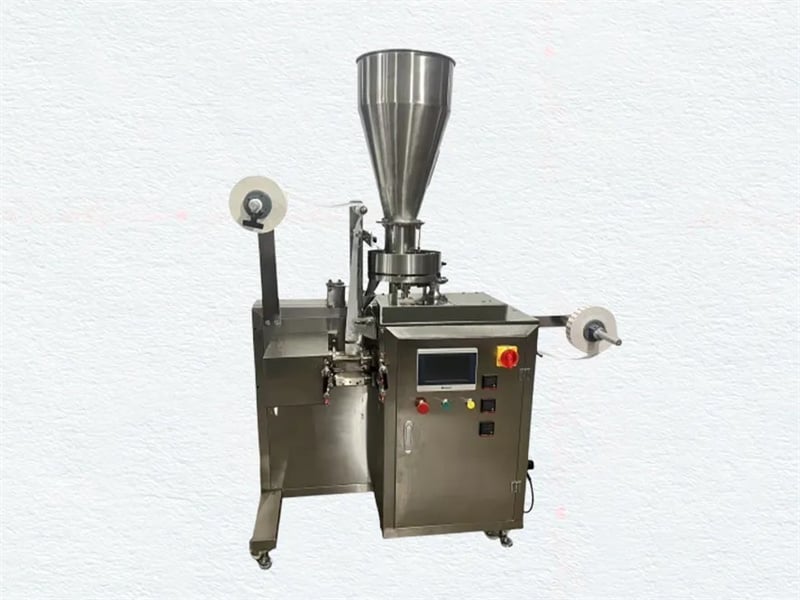
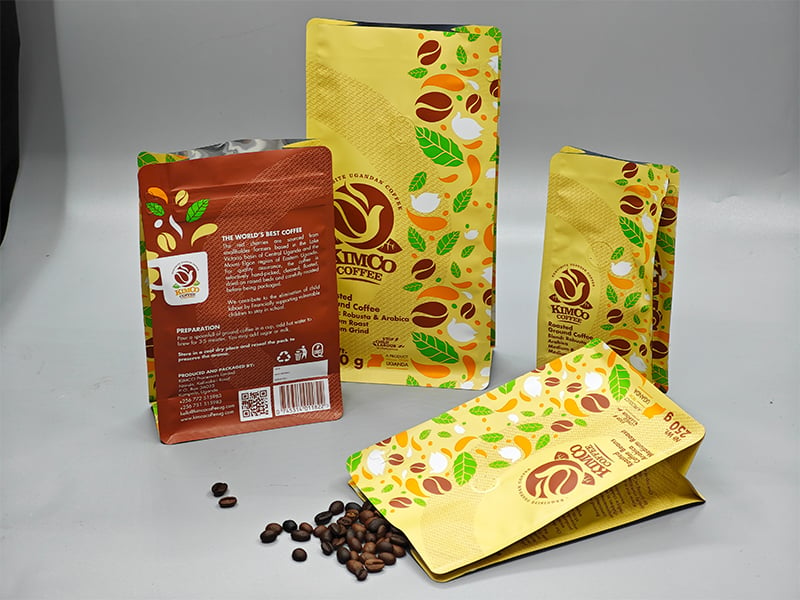
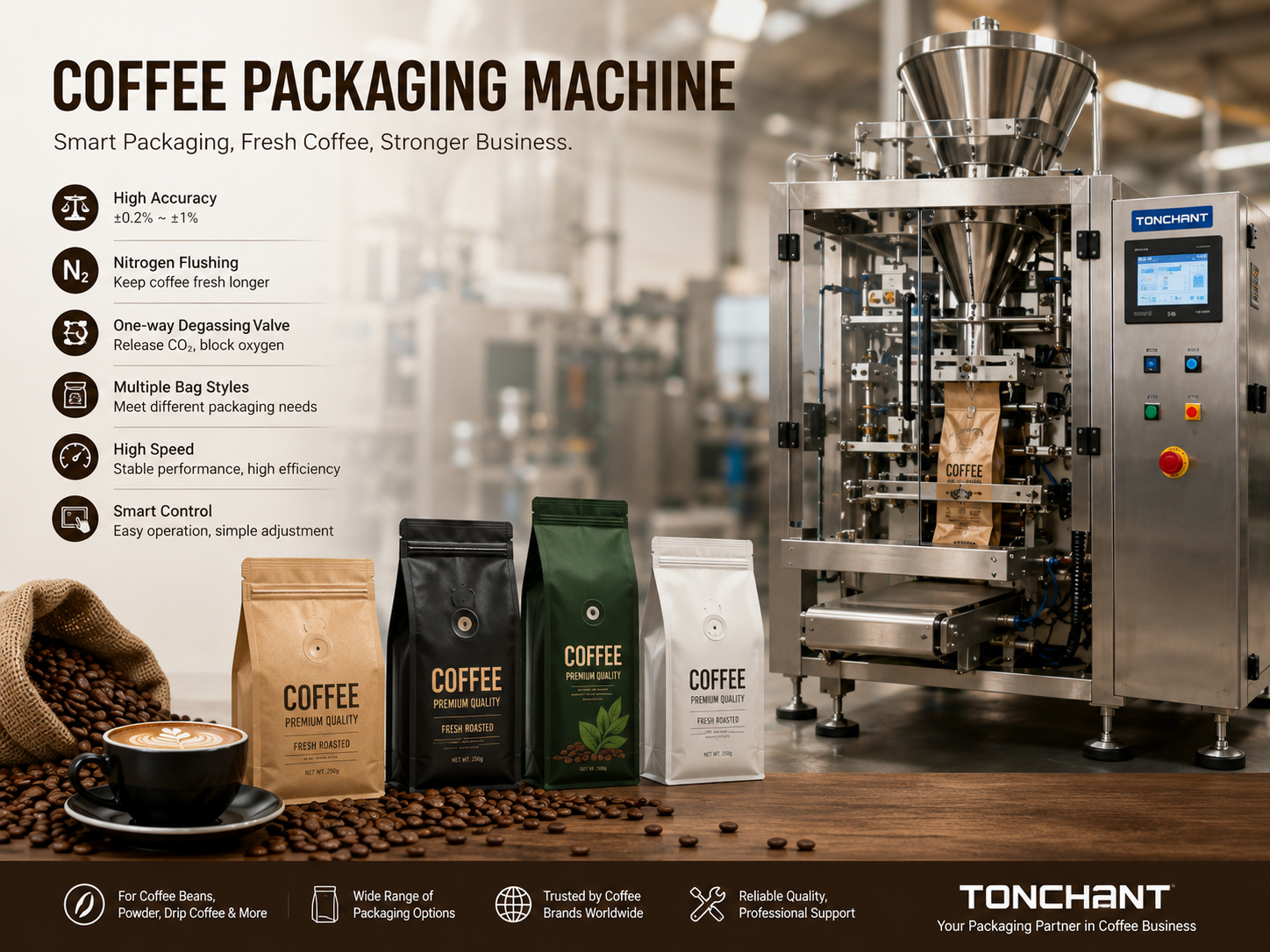
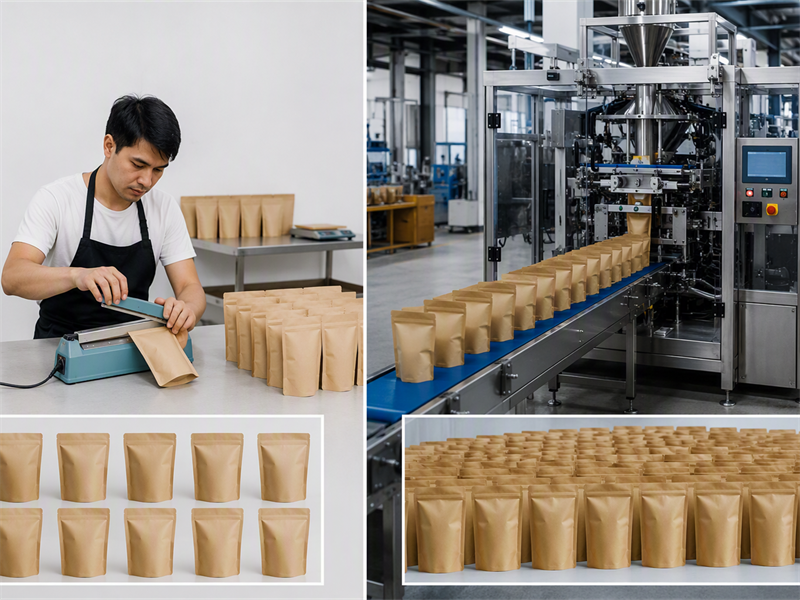
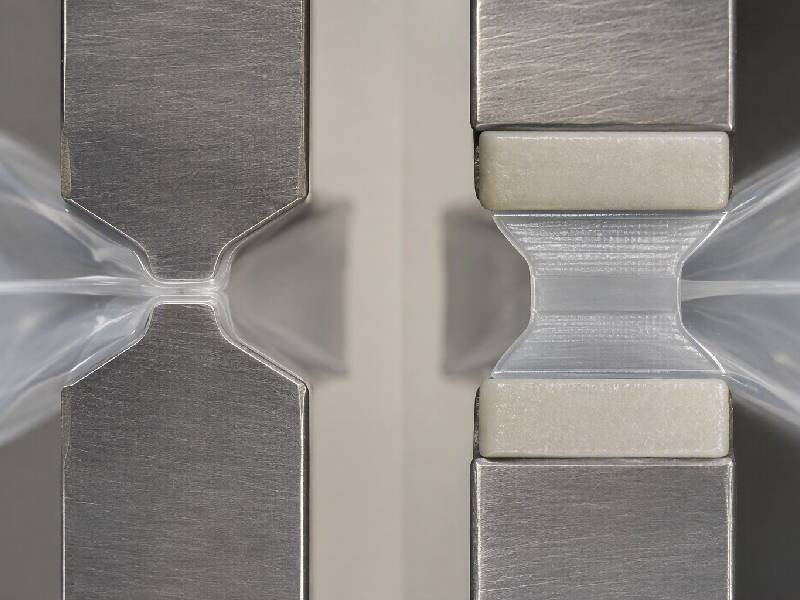
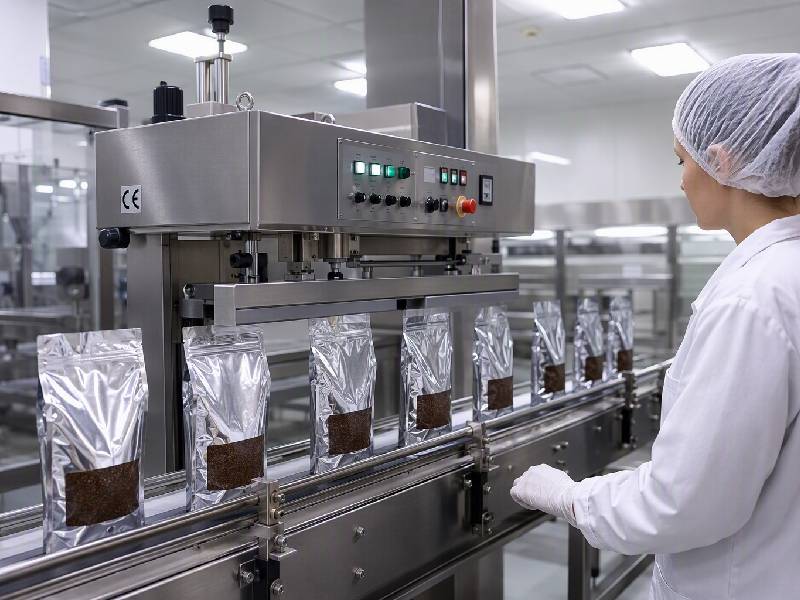
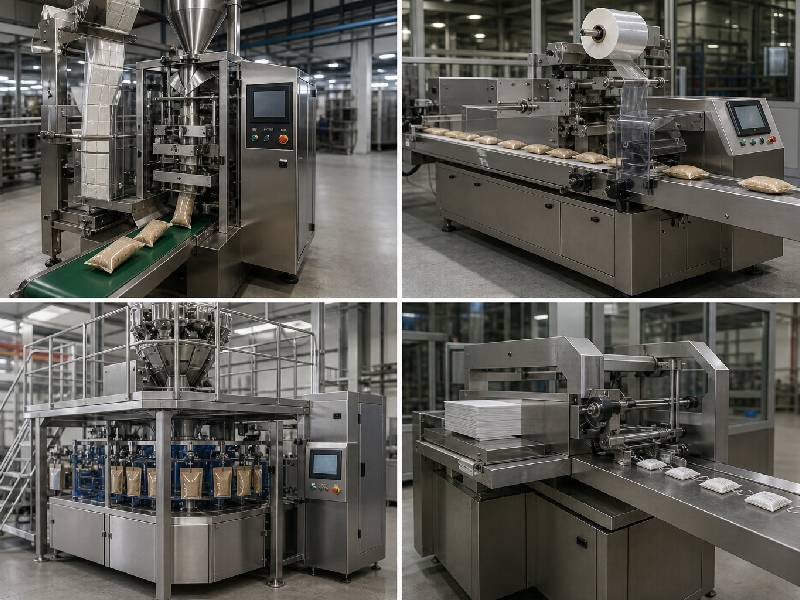
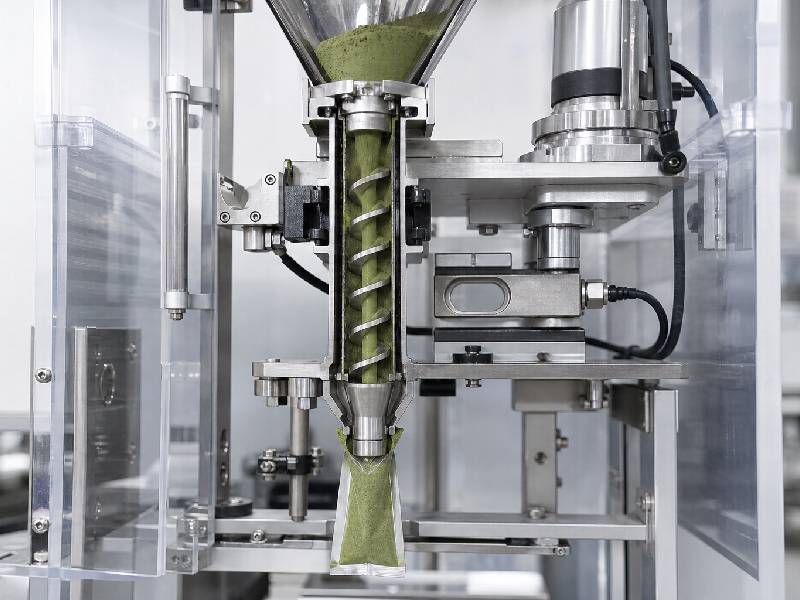
Powder filling is one of the most technically demanding applications in food packaging equipment. Unlike liquid filling, where volume measurement is relatively straightforward, powder filling must account for density variations caused by temperature, humidity, vibration compaction, and the inherent inconsistency of particle size distribution across a production batch. For coffee and tea powder applications specifically — products where fill weight accuracy directly determines per-unit cost and regulatory compliance — choosing a powder filling machine with the right measuring technology and accuracy specification is critical. This guide examines the available powder filling technologies and helps manufacturers identify the right solution for their specific product.
Powder Filling Technologies: Three Approaches
1. Auger Filler
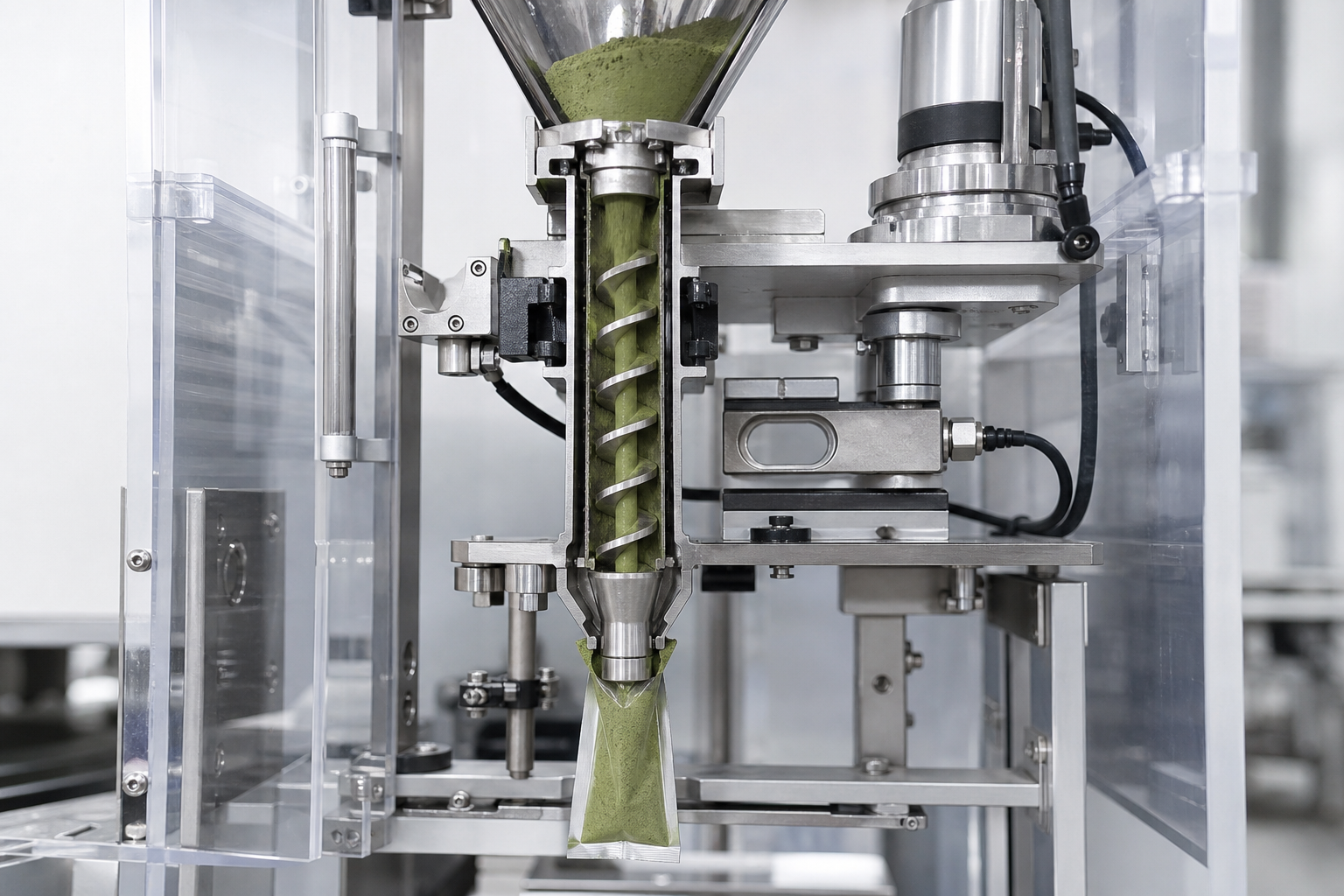
The auger filler uses a rotating screw (auger) to push a measured volume of powder from a hopper into the bag below. The fill weight is controlled by the number of auger rotations per cycle. Auger fillers are the industry standard for fine powders and work well for products with consistent particle size and density.
Best for: ground coffee, matcha, cocoa powder, protein powder, fine spice blends
Key advantage: high speed (30–120 fills/min), low cost, proven reliability
Key limitation: density variation in the product batch causes fill weight drift; requires regular calibration
2. Volumetric Cup Filler
Cup fillers use a rotating disc with fixed cavities (cups) of a defined volume. As the disc rotates, each cup fills from the hopper, then empties into the bag below. Fill weight accuracy is dependent on consistent product density.
Best for: tea bags (loose-leaf, granules), smaller granule coffee products, herbal blends
Key advantage: very gentle product handling, low shear stress on delicate product
Key limitation: less accurate than weight-based filling for products with variable density
3. Combination Weigher / Multihead Weigher
A multihead weigher uses a system of vibrating head units, each containing a small weigh hopper. The computer selects the combination of heads whose combined weight is closest to the target fill weight. This is the highest-accuracy powder and granule filling technology available.
Best for: higher-value products (specialty single-origin coffee, premium tea blends) where fill accuracy ±0.5% or better is required
Key advantage: accuracy of ±0.3–0.5%; works across a wide range of product densities without recalibration
Key limitation: higher capital cost; more complex maintenance
Fill Accuracy Benchmarks by Application
Regulatory requirements and commercial standards vary by product and market. Here are the relevant benchmarks:
| Product | Recommended Accuracy | Regulatory Reference | Filling Technology |
| Ground coffee (retail, EU) | ±1.5 g on 250 g fill = ±0.6% | EU Directive 76/211/EEC (average fill rule) | Auger or multihead |
| Matcha powder (retail, US) | ±0.5–1.0% | FDA 21 CFR Part 101.105 | Auger with load cell |
| Tea bag inner fill | ±0.1–0.3 g on 1.8–3.5 g fill | Internal quality standard | Volumetric cup |
| Herbal blend (loose-leaf) | ±1.0–1.5% | Internal quality standard | Volumetric or multihead |
Food-Grade Material Requirements for Powder Filling Machines
All product-contact surfaces in a powder filling machine must be constructed of:
• SUS304 or SUS316 stainless steel for metal parts (hopper, auger, transfer chutes)
• Food-grade UHMWPE or acetal polymer for non-metal product-contact components
• No galvanized or painted surfaces in product-contact zones
Tonchant's powder filling machines use SUS304 stainless steel throughout all product-contact components, with machine cleaning facilitated by tool-free disassembly of the hopper and auger assembly.
Conclusion & Next Step
Match your powder filling technology to your product's density, particle size, and daily volume. For most coffee and tea applications, the auger filler (for fine powders at medium-to-high speed) or volumetric cup (for tea bags and granules) provides the best balance of accuracy, speed, and cost. Verify food-grade material compliance before purchase.
> Looking for a CE-certified powder filling machine manufacturer with coffee and tea expertise?
> Request a free specification and FOB quote from Tonchant Pack →
> Available filling ranges: 5 g – 1,000 g. Lead time: 15–25 days.