 EN
EN
How to Choose the Right Coffee Packaging Machine for Your Business
The coffee industry has changed dramatically over the past decade. Consumers are no longer buying coffee based on price alone—they expect freshness, attractive packaging, sustainability, and a premium unboxing experience. Behind every well-packaged bag of coffee is reliable production equipment that ensures consistency from the first package to the last.
Whether you're launching a specialty coffee brand, expanding an existing roasting business, or sourcing equipment for a commercial packaging facility, selecting the right coffee packaging machine is a decision that will influence your production efficiency, operating costs, and product quality for years to come.
The market offers everything from compact semi-automatic units to fully integrated automatic coffee packaging machines, each designed for different production goals. Understanding the differences before investing can help you avoid costly upgrades or equipment that no longer meets your needs as your business grows.
This guide explains what to look for, compares different machine types, and shares practical sourcing advice based on Tonchant's experience working with coffee brands and packaging businesses around the world.
Understanding Coffee Packaging Machines
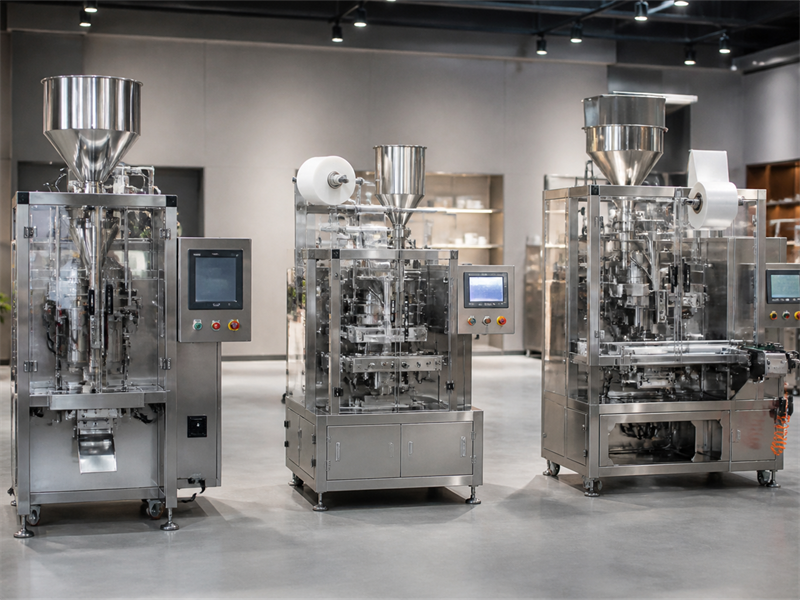
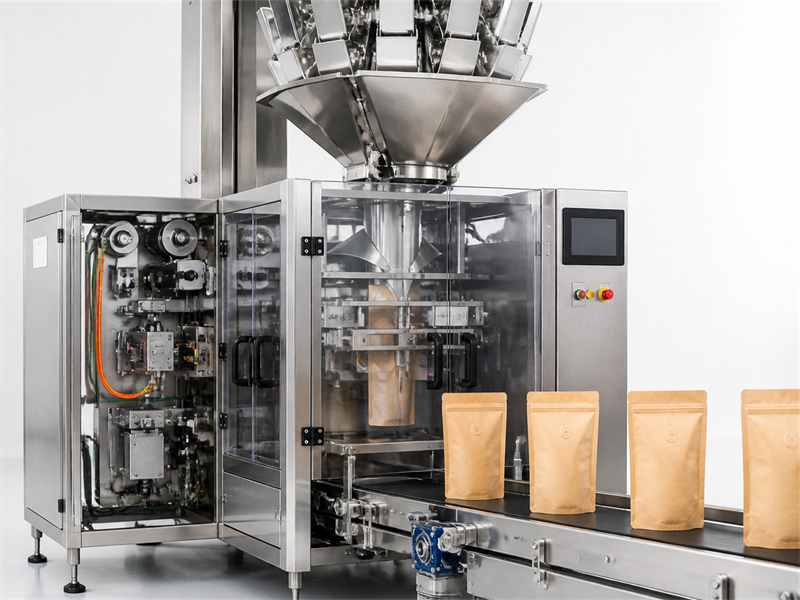
A coffee packaging machine is designed to weigh, fill, and seal coffee into retail or commercial packaging while protecting freshness and maintaining production efficiency.
Today's coffee packaging equipment often combines several processes into one streamlined system. Depending on the configuration, a production line may include:
-
Automatic weighing
-
Product feeding
-
Filling
-
Nitrogen flushing
-
Vacuum packaging
-
One-way degassing valve application
-
Heat sealing
-
Zipper sealing
-
Date coding
-
Labeling
-
Cartoning
The ideal setup depends largely on the type of coffee you package. Whole beans and ground coffee behave very differently during filling, so selecting equipment designed for your product is essential.
 Choosing Equipment Based on Your Coffee Products
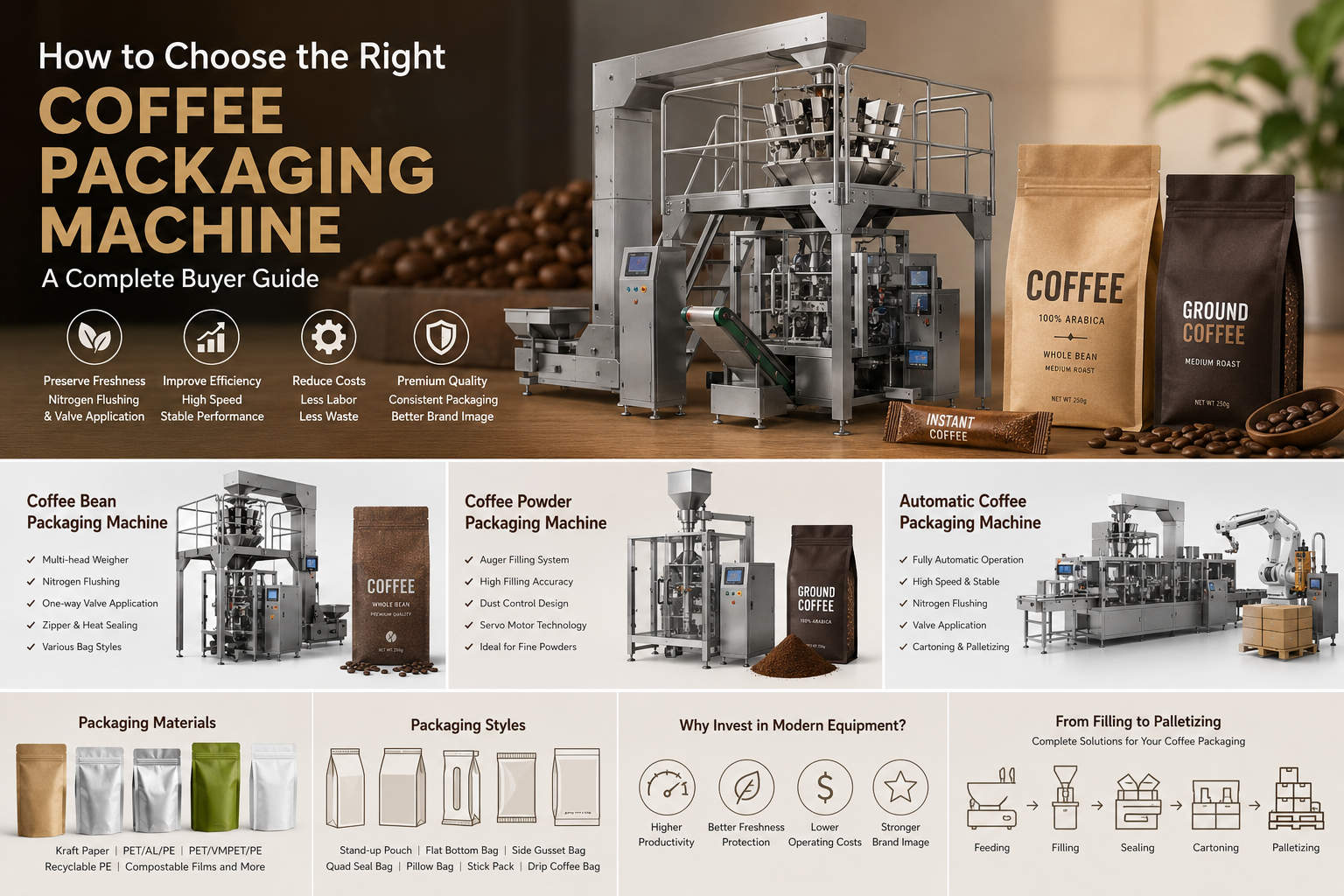
Coffee Bean Packaging Machine
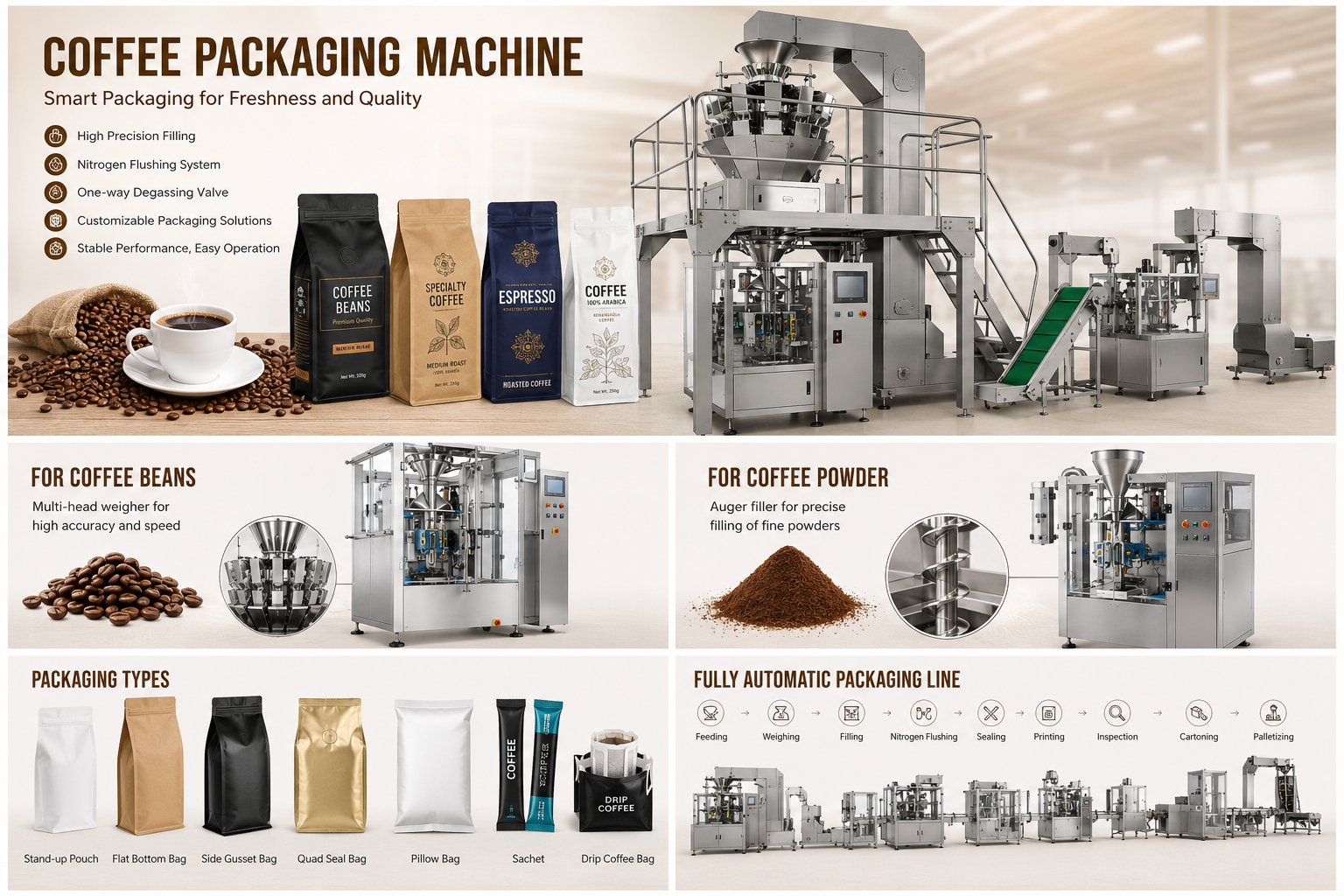
Whole beans require accurate weighing without causing breakage or excessive product movement. A dedicated coffee bean packaging machine typically uses a multi-head weigher to ensure both speed and precision.
These systems are commonly paired with nitrogen flushing and automatic valve applicators to preserve freshness after roasting.
Suitable packaging includes:
-
Flat bottom bags
-
Stand-up pouches
-
Side gusset bags
-
Quad seal bags
-
Pillow bags
Typical Buyer Scenario
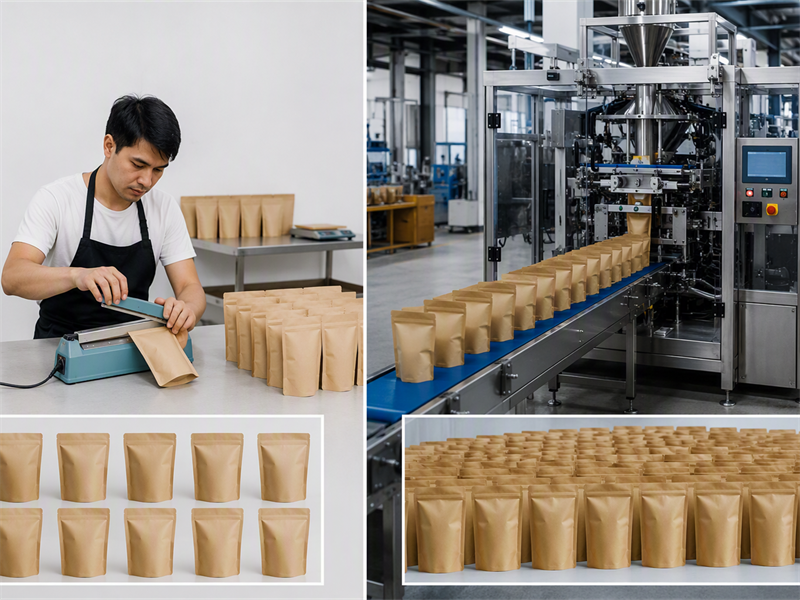
A regional coffee roaster producing 3,000 bags per week may begin with manual filling. As retail orders increase, packaging quickly becomes the production bottleneck. Upgrading to an automatic weighing and sealing system allows the business to package more coffee each day while maintaining consistent weights and reducing labor requirements.
Coffee Powder Packaging Machine
Ground coffee flows differently than whole beans and requires specialized filling technology.
A coffee powder packaging machine generally uses an auger filling system that delivers excellent accuracy while minimizing dust during production.
These machines are suitable for:
-
Ground coffee
-
Espresso blends
-
Instant coffee
-
Flavored coffee powders
Servo-controlled auger fillers also make recipe changes much easier when switching between different products.
Automatic Coffee Packaging Machine
As production volumes increase, many manufacturers move toward a fully automatic coffee packaging machine.
Instead of operating several individual machines, an integrated production line performs multiple processes automatically:
-
Feeding
-
Weighing
-
Filling
-
Bag forming
-
Nitrogen flushing
-
Valve application
-
Sealing
-
Printing
-
Inspection
-
Cartoning
The result is higher output, fewer manual operations, and more consistent packaging quality.
For businesses supplying supermarkets, distributors, or export markets, automation often delivers a faster return on investment than expected because labor savings continue year after year.
Packaging Materials Your Machine Should Support
Coffee packaging continues to evolve as brands balance product protection with sustainability goals.
A versatile coffee packaging machine should be compatible with multiple packaging structures, allowing your business to adapt to changing market demands.
| Material | Features | Common Applications |
|---|---|---|
| Kraft Paper + PE | Natural appearance with moisture protection | Specialty coffee |
| PET/AL/PE | Excellent oxygen and light barrier | Premium roasted coffee |
| PET/VMPET/PE | Cost-effective barrier performance | Retail coffee |
| BOPP/CPP | Transparent display packaging | Promotional products |
| Recyclable Mono PE | Recyclable structure | Sustainable brands |
| Compostable Films | Eco-friendly packaging | Organic and environmentally focused products |
One trend becoming increasingly common is the transition toward recyclable mono-material packaging. Many coffee brands are preparing for future sustainability regulations, making equipment compatibility with newer packaging films an important consideration.
Packaging Formats
Different markets prefer different packaging styles, and flexibility is often a deciding factor when purchasing equipment.
Modern coffee packaging equipment can usually accommodate:
-
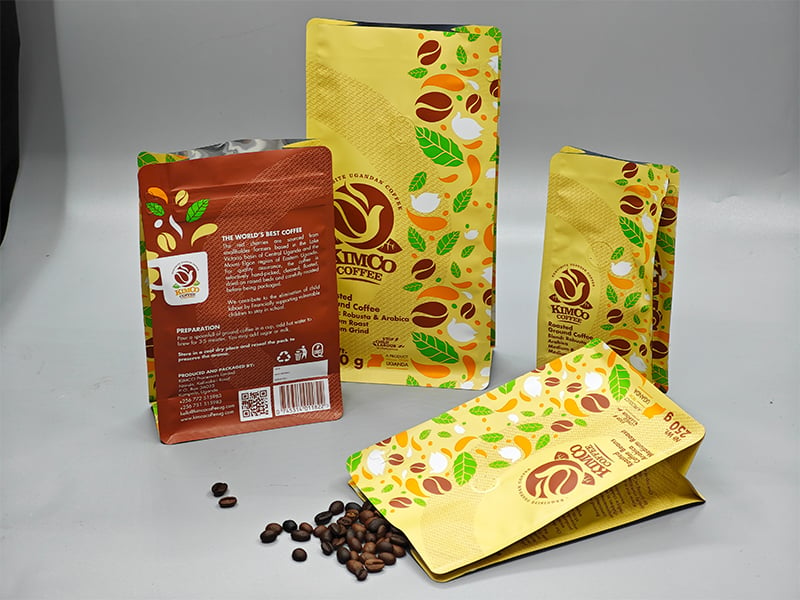
Stand-up pouches
-
Flat bottom bags
-
Side gusset bags
-
Quad seal bags
-
Pillow bags
-
Three-side seal bags
-
Four-side seal bags
-
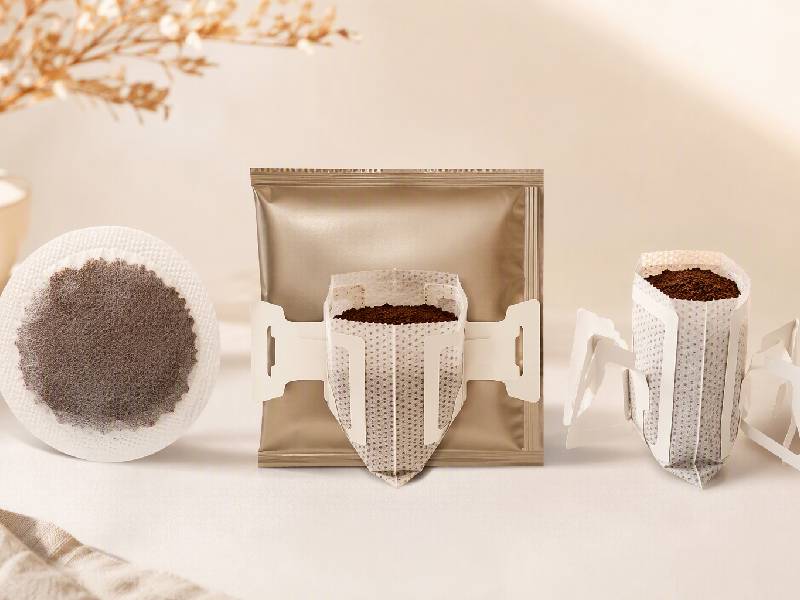
Drip coffee outer bags
-
Vacuum bags
-
Sachets
-
Stick packs
If you plan to introduce new product lines in the future, choosing equipment that supports multiple bag styles can eliminate the need for another major equipment investment later.
Applications Across the Coffee Industry
Coffee packaging machines are used throughout the supply chain.
Typical users include:
-
Specialty coffee roasters
-
Commercial coffee manufacturers
-
Private label suppliers
-
Coffee exporters
-
Instant coffee producers
-
Drip coffee manufacturers
-
Wholesale coffee distributors
Each business has different production priorities. A local artisan roaster may value flexibility for small production runs, while a large contract manufacturer is more concerned with speed, automation, and continuous operation.
What Buyers Should Evaluate Before Purchasing
Production Capacity
Machine speed should match your expected production—not just today's demand, but where your business is likely to be in the next three to five years.
Typical production ranges include:
-
Small businesses: 10–20 bags per minute
-
Growing manufacturers: 30–60 bags per minute
-
Large factories: 80–120 bags per minute
-
High-speed automated lines: 150 bags per minute and above
Purchasing equipment that is too small often results in replacing it much sooner than planned.
Filling Accuracy
Even minor weight variations become expensive over thousands of packages.
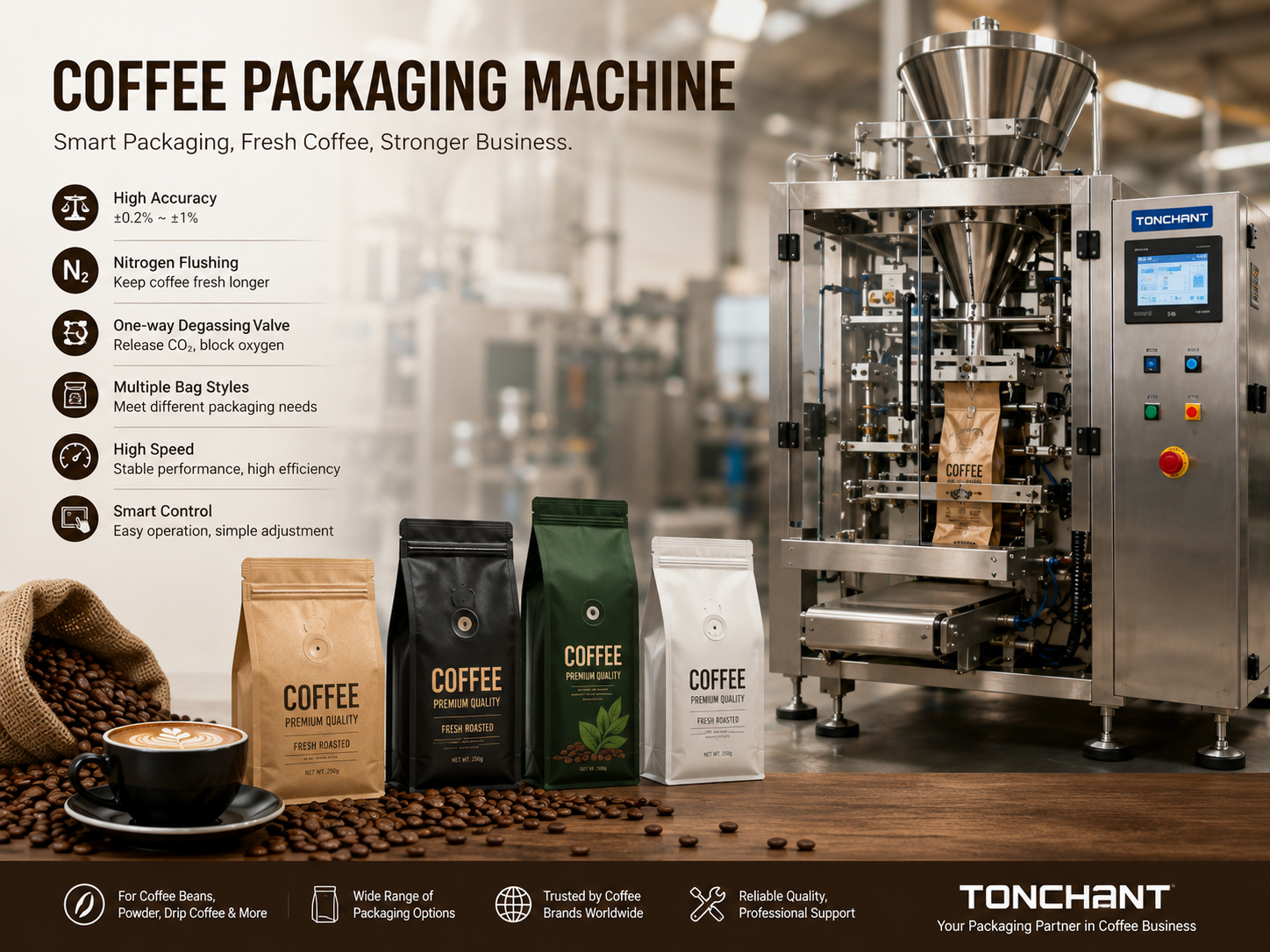
Modern systems generally achieve filling accuracy between ±0.2% and ±1%, depending on the product and weighing technology.
Consistent filling not only reduces product giveaway but also helps maintain customer confidence in your brand.
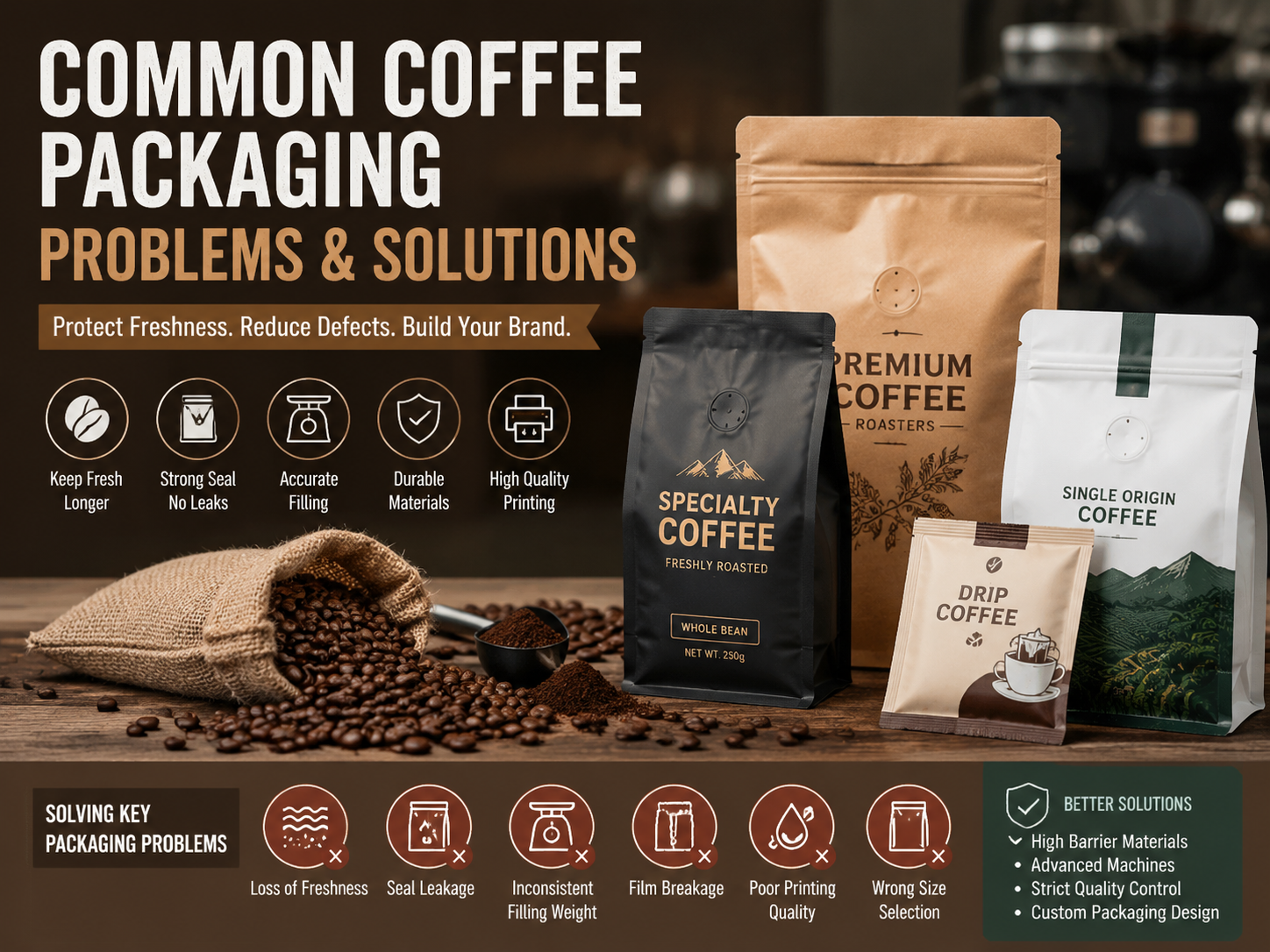
Nitrogen Flushing
Freshly roasted coffee begins losing aroma as soon as it is exposed to oxygen.
Nitrogen flushing replaces oxygen inside the package, helping preserve flavor while extending shelf life.
Most premium roasted coffee brands now consider this feature a standard requirement rather than an optional upgrade.
One-Way Degassing Valve
Coffee continues releasing carbon dioxide for days after roasting.
A one-way valve allows gas to escape without allowing oxygen to enter the package.
If your business sells freshly roasted whole beans, integrating automatic valve application into your production line can significantly improve efficiency.
Automation Level
Not every company requires full automation.
Smaller businesses often benefit from semi-automatic systems because they provide flexibility at a lower initial investment.
As production expands, additional modules such as automatic feeding, robotic palletizing, or cartoning can often be added without replacing the entire line.
Planning for future expansion is usually more cost-effective than purchasing equipment based only on current production.
Advantages of Modern Coffee Packaging Equipment
Investing in quality coffee packaging equipment offers benefits that extend beyond faster packaging.
Key advantages include:
-
Higher production efficiency
-
Reduced labor costs
-
Consistent package quality
-
Improved freshness protection
-
Lower product waste
-
Better packaging appearance
-
Greater production flexibility
-
Easier maintenance
-
Long-term operating cost savings
While purchase price naturally matters, experienced buyers often focus more on total operating cost over the machine's lifetime.
Reliable equipment with readily available spare parts frequently delivers better value than a lower-priced alternative that requires frequent repairs.
Customization Options
Every coffee producer has different production requirements.
Machine customization allows equipment to fit your workflow instead of forcing your production process to adapt.
Common customization options include:
-
Semi-automatic or fully automatic configurations
-
Vertical form-fill-seal systems
-
Rotary pouch packaging systems
-
Multi-head weighers
-
Auger filling systems
-
Different bag sizes
-
Zipper sealing
-
Nitrogen flushing
-
Vacuum packaging
-
Automatic valve application
-
Inkjet printing
-
Laser coding
-
Label applicators
-
Metal detectors
-
Check weighers
-
Automatic cartoning
-
Robotic palletizing
-
Multiple voltage standards
-
Multi-language operating interfaces
Discussing your long-term production plans with the manufacturer before ordering often leads to a better machine configuration than selecting equipment from a standard catalog.
Sourcing Considerations
Purchasing a coffee packing machine involves much more than comparing prices.
Experienced buyers usually evaluate suppliers based on several important factors:
-
Manufacturing experience
-
Engineering capability
-
Availability of spare parts
-
Technical support response time
-
Machine testing before shipment
-
Installation assistance
-
Operator training
-
Warranty coverage
-
Export experience
-
Compliance with destination country requirements
If possible, request a factory acceptance test using your own coffee products and packaging materials. This allows you to verify filling accuracy, sealing quality, and production speed before shipment.
It is also worthwhile to ask whether critical electrical and pneumatic components come from internationally recognized brands. Well-known components generally simplify maintenance and replacement in overseas markets.
Tonchant's Manufacturing Experience
At Tonchant, we have worked closely with coffee businesses ranging from emerging specialty roasters to established international brands. Over the years, one pattern has remained consistent: no two customers package coffee in exactly the same way.
Some focus on premium flat bottom bags with one-way valves, while others prioritize flexible stand-up pouches for seasonal products or retail promotions. Exporters often need equipment that can handle multiple bag sizes for different markets, whereas contract manufacturers typically emphasize high-speed production and quick changeovers.
This experience has reinforced the importance of understanding a customer's production goals before recommending equipment. Rather than simply matching a machine to today's order volume, we help customers consider future expansion, packaging material compatibility, automation upgrades, and long-term operating costs.
By combining packaging expertise with practical manufacturing experience, Tonchant supports customers in building packaging lines that remain efficient and adaptable as their businesses grow.
MOQ
Unlike packaging materials, machinery is generally purchased individually.
Typical order quantities are straightforward.
| Purchase Type | MOQ |
|---|---|
| Standard Machine | 1 Set |
| Customized Machine | 1 Set |
| Complete Packaging Line | 1 Set |
Most manufacturers also offer machine testing before shipment to confirm performance.
Lead Time
Production schedules vary according to machine complexity and customization.
| Machine Type | Typical Lead Time |
|---|---|
| Standard Machine | 15–30 Days |
| Customized Machine | 30–45 Days |
| Fully Automated Line | 45–90 Days |
Ordering early is particularly important before peak coffee production seasons, as demand for packaging machinery often increases during these periods.
Certificates
When sourcing internationally, certification should never be overlooked.
Common certifications include:
-
CE
-
ISO 9001
-
SGS Inspection
-
FDA-compliant food-contact components where applicable
-
UL-compatible electrical components upon request
-
RoHS-compliant electrical parts
Verifying certification before production begins can help avoid delays during customs clearance or equipment installation.
Comparison Table
| Feature | Semi-Automatic Coffee Packaging Machine | Automatic Coffee Packaging Machine |
|---|---|---|
| Initial Investment | Lower | Higher |
| Labor Requirement | Higher | Lower |
| Production Speed | Moderate | High |
| Filling Accuracy | Good | Excellent |
| Nitrogen Flushing | Optional | Available or Integrated |
| Valve Application | Manual or Optional | Automatic |
| Maintenance | Simple | Moderate |
| Best Suited For | Startups and Small Roasters | Medium and Large Manufacturers |
| Expansion Potential | Moderate | Excellent |
| Long-Term ROI | Good | Excellent |
Frequently Asked Questions
What is the difference between a coffee bean packaging machine and a coffee powder packaging machine?
A coffee bean packaging machine uses weighing systems designed for whole beans, while a coffee powder packaging machine relies on auger filling technology to accurately handle fine powders.
Is nitrogen flushing necessary?
For roasted coffee, nitrogen flushing is strongly recommended because it reduces oxygen exposure and helps preserve aroma, flavor, and shelf life.
Can one machine package multiple bag sizes?
Yes. Most modern machines can switch between different bag dimensions with tooling changes and parameter adjustments.
Which packaging materials are compatible?
Most equipment supports laminated films, aluminum foil laminates, kraft paper laminates, recyclable mono-material films, and many compostable packaging structures.
How accurate are automatic coffee packaging machines?
Depending on the filling system and product characteristics, filling accuracy generally ranges from ±0.2% to ±1%.
Can the machine automatically apply degassing valves?
Yes. Many premium systems include automatic one-way valve application for coffee bean packaging.
How long does installation usually take?
Most installations are completed within two to seven days, depending on machine complexity and production line integration.
What after-sales support should buyers expect?
Reliable suppliers typically provide installation guidance, operator training, technical documentation, spare parts support, remote troubleshooting, and warranty service.
Conclusion
Choosing the right coffee packaging machine is ultimately about finding equipment that fits both your current production needs and your long-term business strategy.
For a growing specialty roaster, flexibility and ease of operation may be the highest priorities. Larger manufacturers, on the other hand, often benefit from investing in fully integrated automatic coffee packaging machines that improve productivity while reducing labor costs. Businesses packaging whole beans should focus on weighing accuracy, nitrogen flushing, and valve application, while those producing ground coffee will benefit from a well-designed coffee powder packaging machine with reliable auger filling technology.
Beyond technical specifications, selecting the right supplier is equally important. Strong engineering support, dependable after-sales service, readily available spare parts, and experience serving international markets can make a significant difference throughout the life of your equipment.
At Tonchant, we believe successful packaging solutions begin with understanding each customer's products, production goals, and future plans. By combining practical industry knowledge with manufacturing expertise, we help businesses source coffee packing machines and coffee packaging equipment that deliver reliable performance today while remaining ready for tomorrow's growth.