
 EN
EN
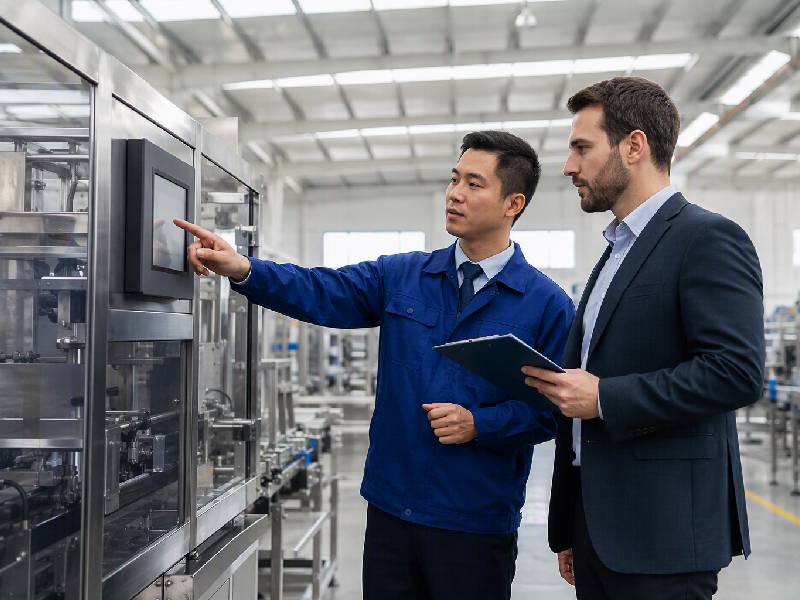
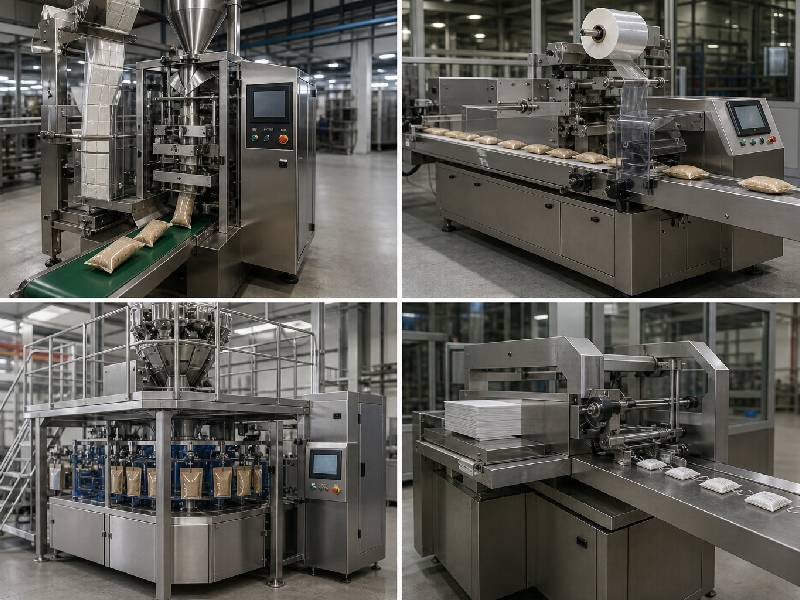
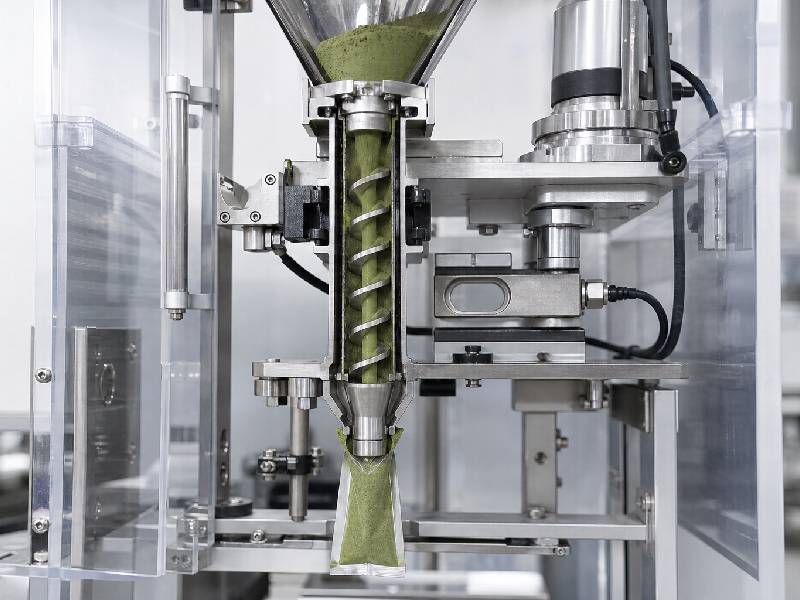
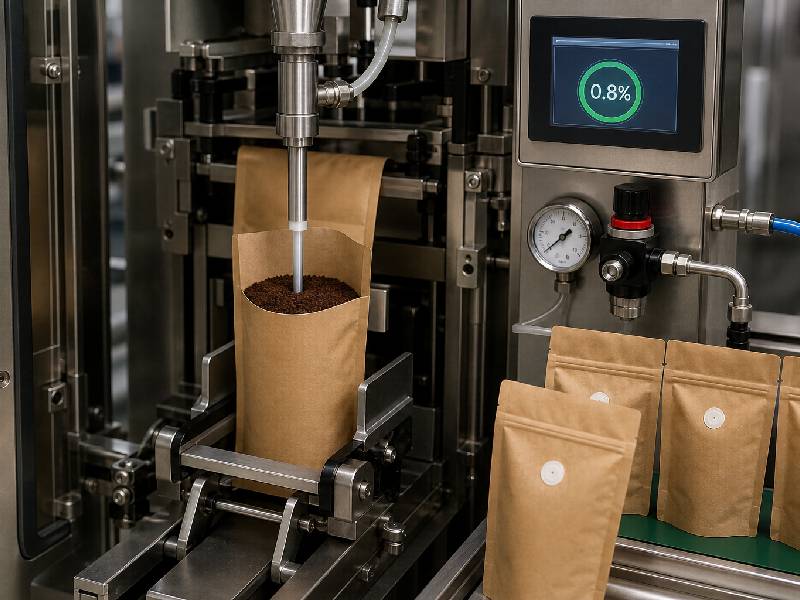
Oxygen is the primary enemy of roasted coffee freshness. At the moment of grinding, coffee begins oxidizing — the volatile aromatic compounds that define flavor quality break down at a rate directly proportional to oxygen exposure. For roasters distributing to retail, foodservice, or e-commerce channels with fulfillment cycles of 30+ days, achieving a residual oxygen level below 1% inside the sealed package is a commercial necessity, not a premium feature. Nitrogen flushing is the standard industrial method for achieving this target, and understanding the technical requirements for nitrogen flushing integration in a coffee packing machine is essential for buyers who need to specify this capability correctly.
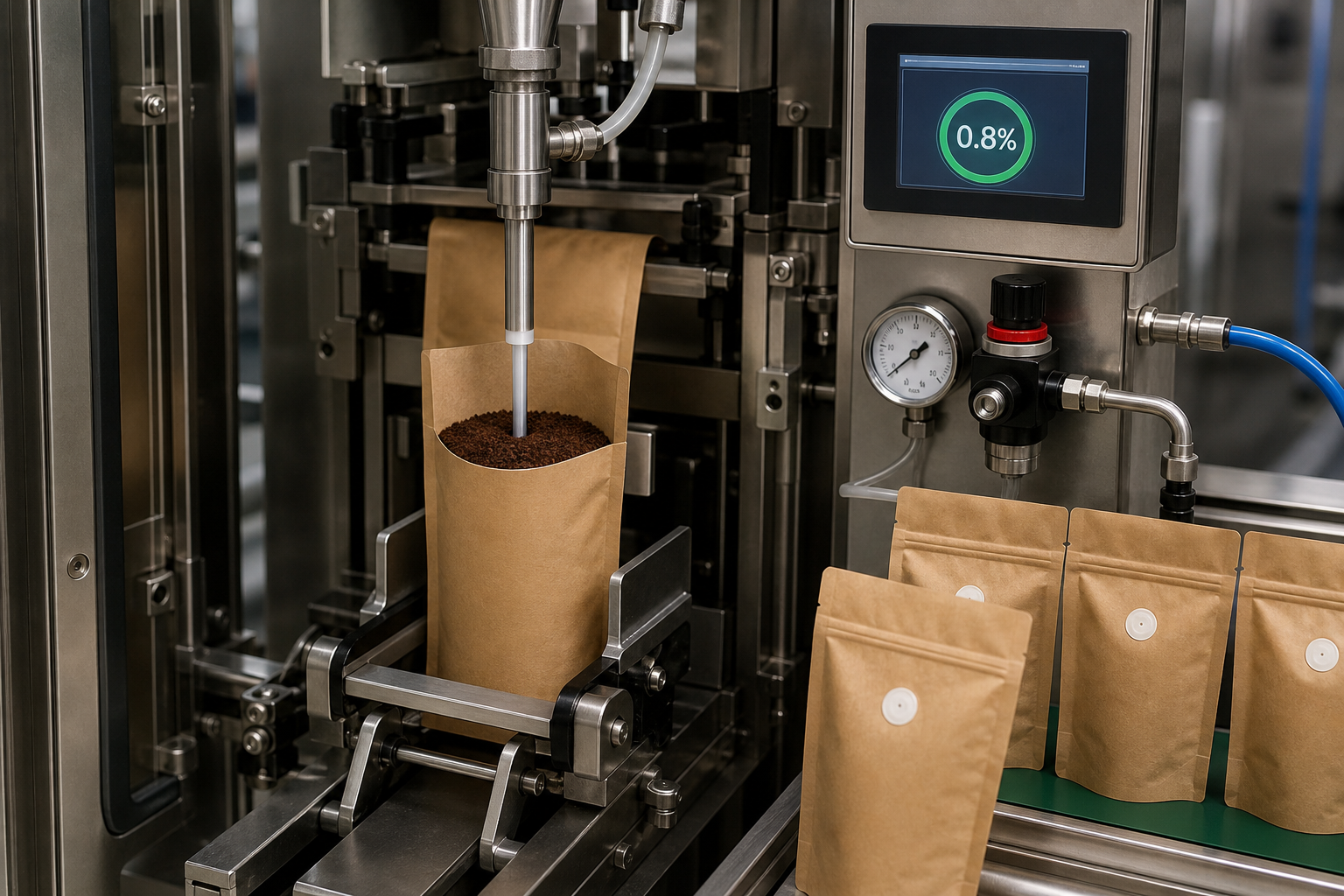
The Science of Nitrogen Flushing
Nitrogen (N₂) is an inert gas — it does not react with coffee's aromatic compounds, oils, or acids. When injected into a package before sealing, nitrogen displaces the atmospheric air (approximately 21% oxygen) and replaces it with a non-reactive gas atmosphere.
The critical metric is residual oxygen (RO) level, measured in percentage. Industry benchmarks:
• Standard nitrogen flush: RO ≤ 2% (acceptable for a 6-month shelf life target)
• Enhanced nitrogen flush: RO ≤ 1% (required for a 12-month shelf life target)
• Premium specialty coffee: RO ≤ 0.5% (used by premium roasters with 18-month shelf life claims)
Achieving a lower residual oxygen level requires either a higher nitrogen purge volume or a longer purge duration — both of which affect machine speed. The engineering trade-off between target oxygen level and throughput speed is a key specification question when ordering a nitrogen-flushing packing machine.
Machine Integration: How Nitrogen Flushing Is Built Into Packing Machines
Nitrogen flushing can be integrated into a packing machine at two points in the sealing sequence:
Pre-fill nitrogen purge: Nitrogen is injected into the empty bag before the product filling cycle begins, displacing the initial air volume. This is less effective as a standalone approach because product falling into the bag re-introduces some oxygen.
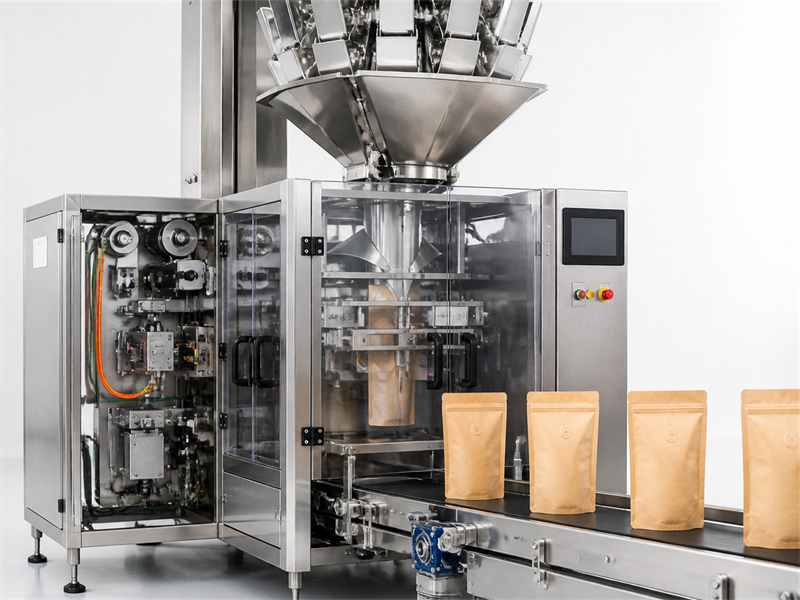
Post-fill nitrogen purge: Nitrogen is injected above the product after filling is complete but before the bag is sealed. This is the more effective and commonly used approach. A snorkel or lance nozzle directs the nitrogen flow into the headspace above the product. The purge duration and flow rate determine the final residual oxygen level.
Dual-stage purge: A combination of pre-fill and post-fill purging, used when RO ≤ 0.5% is required. This approach adds 0.5–1 second per bag to the cycle time.
Technical Specifications for Nitrogen Flushing Modules
When specifying nitrogen flushing capability for a coffee packing machine, request the following parameters from the supplier:
| Parameter | Specification Range | Notes |
| Nitrogen purity requirement | ≥99.5% N₂ | Higher purity reduces purge volume needed |
| Nitrogen consumption per bag | 0.5–3.0 liters/bag | Depends on bag size and target RO level |
| Nitrogen inlet pressure | 0.4–0.6 MPa (4–6 bar) | Typical range for food-grade N₂ supply |
| Purge nozzle material | SUS316 stainless steel | Food-grade material requirement |
| Residual oxygen measurement | Inline O₂ sensor available? | Premium specification; confirms actual RO level |
Cost Implications of Nitrogen Flushing
Adding nitrogen flushing to a coffee packing machine increases operating costs in two ways: the machine module cost and the ongoing nitrogen gas consumption cost.
The machine module addition typically adds USD 800–2,500 to the machine cost, depending on the purging configuration. The gas cost depends on whether you use a liquid nitrogen supply (lower per-unit cost at high consumption volumes) or a nitrogen generator (higher capital cost, lower per-unit cost over the machine's operational life).
For production volumes above 50,000 bags/month, a nitrogen generator typically achieves a 2–3 year payback compared to liquid nitrogen cylinder supply. Below this volume, cylinder supply is generally more economical.
Conclusion & Next Step
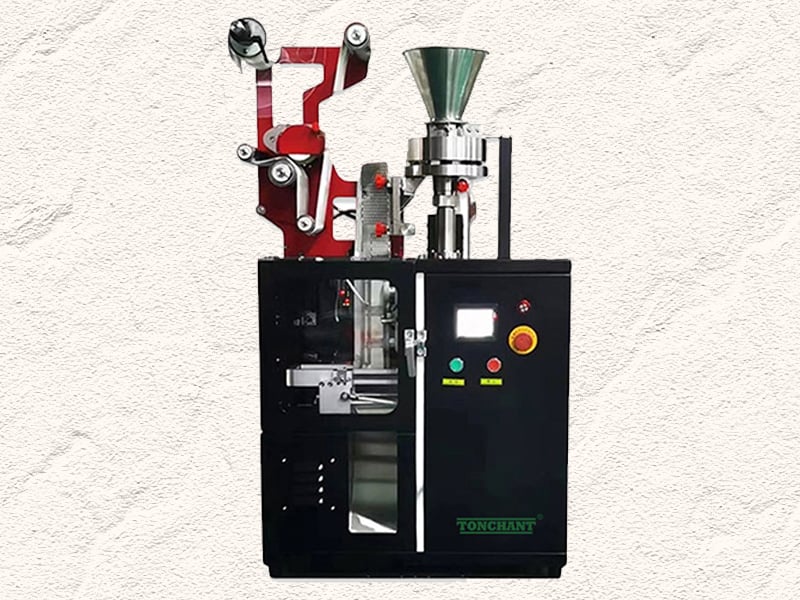
Nitrogen flushing is a standard, technically mature capability that any credible automatic coffee packing machine manufacturer should be able to integrate. Specify your target residual oxygen level, confirm the nitrogen consumption rate, and verify that the flushing nozzle uses food-grade SUS316 material.
> Need nitrogen flushing integrated into your coffee packing machine?
> Contact Tonchant Pack's engineering team for a free technical consultation →
> Available on all automatic coffee packing machine models. Lead time: 15–25 days.