
 EN
EN

How Coffee Capsule Machines Improve Productivity: A Practical Guide for Growing Coffee Businesses
Introduction
The coffee capsule market has changed significantly in recent years. What was once mainly a home coffee convenience product is now widely used by restaurants, hotels, offices, coffee retailers, and food service companies looking for a reliable way to deliver consistent coffee quality.

For busin esses producing coffee capsules at commercial scale, productivity is not simply about making more units in less time. It is about building a production process that is stable, repeatable, and flexible enough to support growth.
A well-designed coffee capsule machine can help companies achieve this by automating key steps in the capsule manufacturing p rocess, including coffee filling, sealing, and quality control. This reduces production variation, improves efficiency, and allows businesses to respond faster to changing customer demand.
However, purchasing capsule equipment is a major decision. Many buyers have concerns before investing:
-
Will the machine handle our current and future production volume?
-
Can it work with compostable or recyclable capsule materials?
-
How much customization is possible?
-
What certifications are required for our target market?
-
Is the supplier able to provide technical support after installation?
-
What is the MOQ for customized solutions?
These questions are common among restaurant groups, distributors, wholesalers, and sustainable packaging buyers.
The right equipment should not only solve today's production challenges. It should also support future expansion, whether that means launching new coffee products, entering new markets, or increasing monthly output.
With years of experience in coffee packaging manufacturing, Tonchant Earth works with businesses to evaluate packaging materials, production requirements, and sustainable solutions. The focus is not just on supplying equipment, but on helping customers build a practical coffee capsule production system that fits their business model.
What Is a Coffee Capsule Machine?
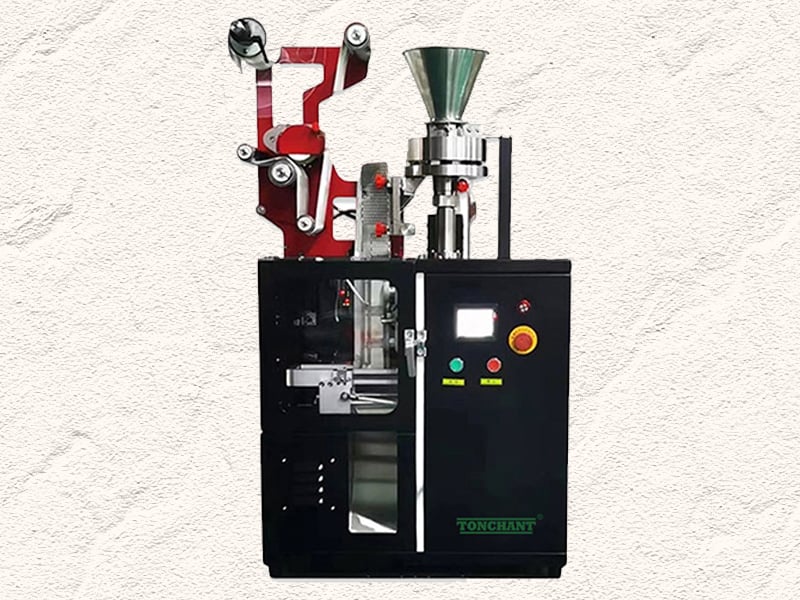
A coffee capsule machine is specialized production equipment used to manufacture single-serve coffee capsules. Depending on the machine configuration, it can complete several processes automatically, including capsule loading, coffee dosing, pressing, sealing, inspection, and finished product collection.
At the center of the process is the capsule filling machine, which controls the amount of coffee placed into each capsule. Accurate filling is essential because even small differences in coffee weight can affect extraction performance and the customer's drinking experience.
A typical production workflow includes:
-
Empty capsule feeding
-
Precise coffee filling
-
Powder leveling or tamping
-
Capsule sealing
-
Quality inspection
-
Finished capsule output
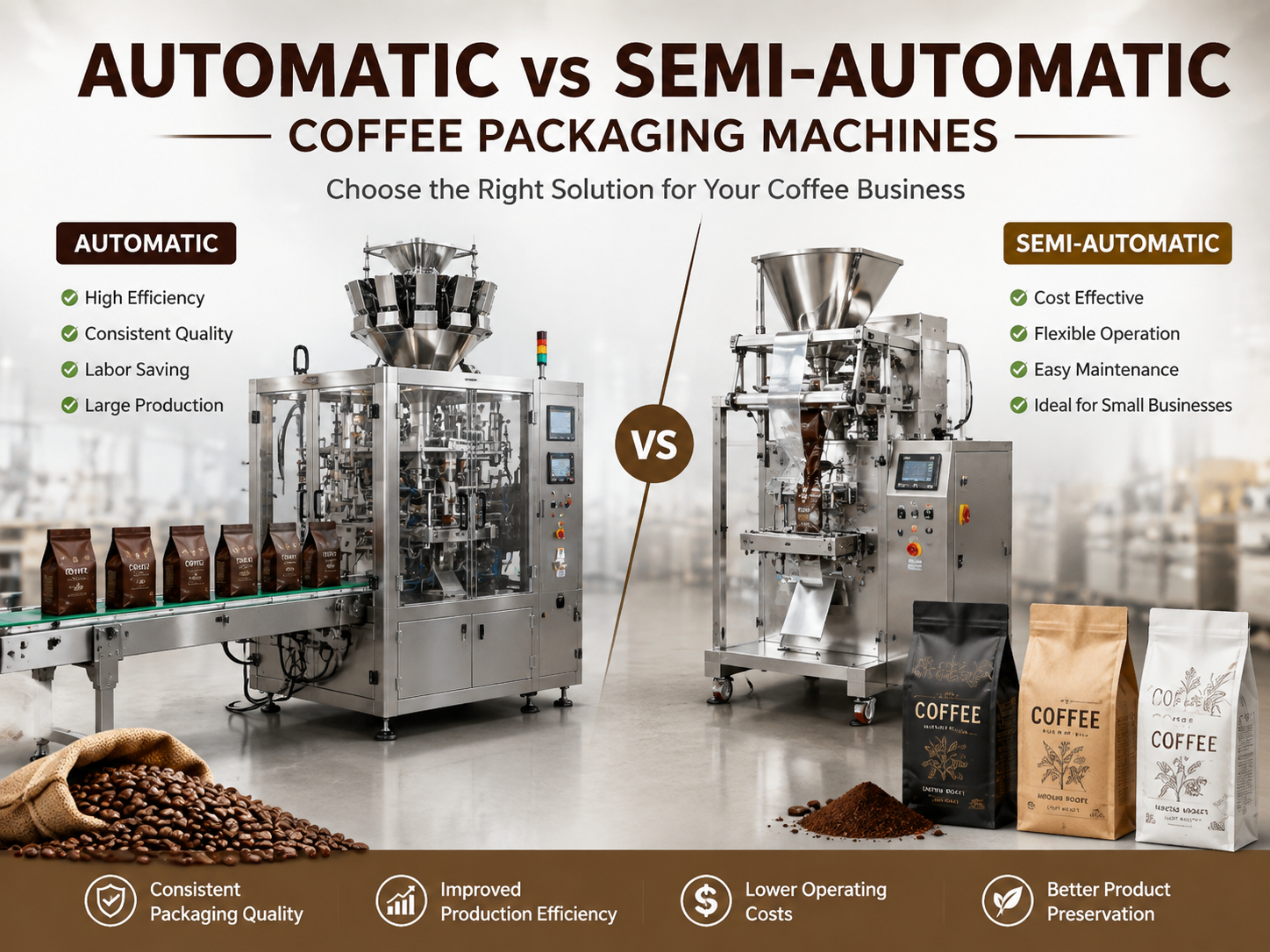
For a small specialty coffee company, a semi-automatic machine may be enough when testing a new product line. The company may only need several thousand capsules per month while building customer demand.
A large distributor supplying supermarkets or restaurant chains has different requirements. They may need a fully automated system capable of handling large volumes with minimal downtime.
Different Types of Coffee Capsule Machines
| Machine Type | Suitable Business | Advantages | Considerations |
|---|---|---|---|
| Manual equipment | Startups and testing projects | Lower investment and flexible operation | Limited output |
| Semi-automatic machines | Growing coffee brands | Good balance between cost and efficiency | Requires operator involvement |
| Fully automatic machines | Large manufacturers and distributors | High productivity and consistent quality | Higher initial investment |
| Customized production systems | Large-scale or special projects | Designed for specific requirements | Longer planning and testing period |
Choosing the right machine depends on production goals, not just current demand.
Key Benefits of Coffee Capsule Machines
Higher Production Efficiency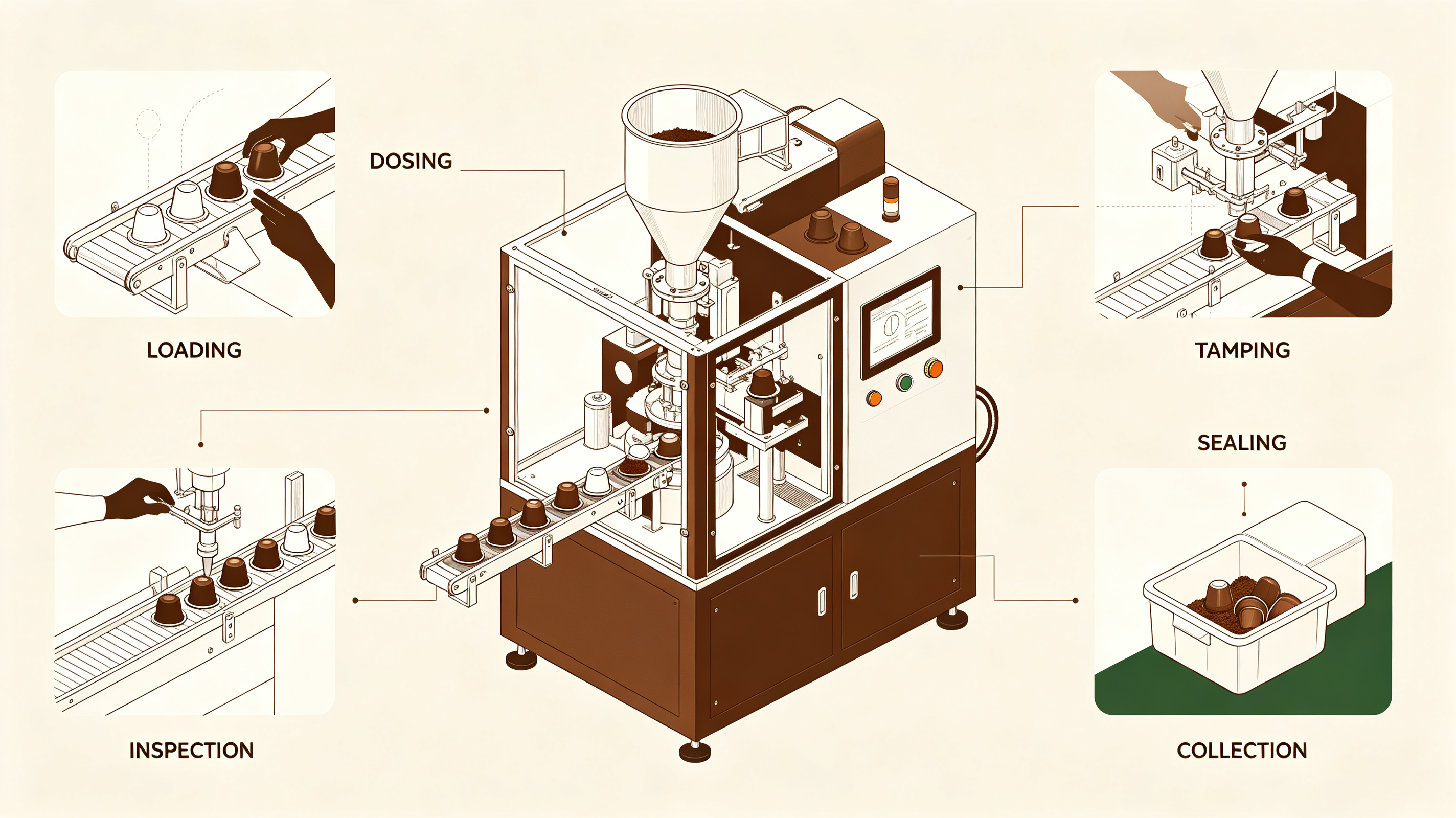
One of the biggest advantages of automation is the ability to increase output without increasing labor at the same rate.
Manual capsule production requires workers to handle repeated tasks such as measuring coffee, loading capsules, and checking seals. This approach may work for small orders, but it becomes difficult when demand grows.
For example, a regional coffee distributor may start with orders from several local cafes. After expanding into online sales and retail channels, monthly demand can increase quickly. Without automated equipment, production delays and inconsistent quality may become serious problems.
A coffee capsule machine helps create a smoother workflow and allows businesses to scale production more efficiently.
Improved Filling Accuracy and Product Consistency
Coffee customers expect reliability. Whether they buy a capsule from a hotel room, restaurant, or online store, they expect the same taste every time.
Small differences in coffee dosage can change:
-
Extraction strength
-
Flavor balance
-
Brewing performance
-
Customer satisfaction
A modern capsule filling machine provides accurate dosing and stable production conditions, helping brands maintain consistent quality across large production runs.
For restaurant chains operating in multiple locations, this consistency is especially valuable. A customer visiting different branches should experience the same coffee quality regardless of location.
Reduced Labor Pressure
Labor availability has become a challenge for many manufacturers. Businesses are looking for ways to improve productivity while making better use of their existing teams.
Automation does not eliminate the need for skilled operators. Instead, it changes their role.
Instead of spending hours on repetitive filling tasks, employees can focus on:
-
Machine monitoring
-
Quality checks
-
Material preparation
-
Maintenance procedures
This allows production teams to work more efficiently.
Better Packaging Protection
Coffee freshness depends heavily on packaging performance.
Exposure to oxygen and moisture can reduce aroma and shorten shelf life. A reliable production system ensures that filling and sealing processes are completed consistently.
For companies selling through e-commerce platforms or international distributors, packaging quality is particularly important. Products may spend weeks in storage or transportation before reaching customers.
A stable sealing process helps protect the coffee throughout the supply chain.
Supports Sustainable Coffee Packaging
Sustainability is becoming an important purchasing factor in the coffee industry.
Many brands are exploring:
-
Compostable capsules
-
Recyclable packaging materials
-
Reduced plastic solutions
-
Plant-based alternatives
However, sustainable materials can behave differently during production. A capsule material that looks suitable on paper may require specific sealing temperatures or production adjustments.
This is why equipment selection and packaging material selection should happen together.
Tonchant Earth has factory experience working with different packaging requirements and helps customers evaluate whether materials, machinery, and production goals are aligned before moving into larger-scale production.
Applications of Coffee Capsule Machines
Restaurant Chains and Hospitality Companies
Restaurant groups and hotels often need consistent coffee quality across multiple locations.
A centralized capsule production system allows them to control:
-
Coffee blends
-
Portion size
-
Packaging appearance
-
Product availability
For example, a hotel chain may develop private-label coffee capsules for guest rooms. Instead of relying on different coffee suppliers at each location, the company can maintain one standardized product.
Food Delivery Companies
Food delivery businesses are increasingly adding packaged products to their services.
Coffee capsules are attractive because they are:
-
Easy to store
-
Simple to transport
-
Suitable for subscription models
-
Less fragile than many fresh products
A delivery company launching breakfast packages may use branded coffee capsules as an additional revenue stream.
In this case, production reliability matters because packaging delays can directly affect customer orders.
Distributors and Wholesalers
Distributors often require more flexibility than single-brand manufacturers.
They may supply:
-
Different coffee brands
-
Multiple markets
-
Various capsule formats
-
Private-label customers
For these buyers, equipment flexibility is important. A machine that supports future product changes can provide better long-term value.
Sustainable Packaging Buyers
Companies focused on sustainable products need to consider the entire production process.
A common sourcing mistake is choosing a capsule material first and checking equipment compatibility afterward.
A better approach is to evaluate:
-
Capsule material
-
Filling requirements
-
Sealing performance
-
Production speed
-
End-market regulations
This reduces the risk of unexpected problems after investment.
Buying Guide: How to Choose the Right Coffee Capsule Machine
1. Start With Production Planning
Before contacting suppliers, buyers should understand their own production requirements.
Important questions include:
-
How many capsules will be produced monthly?
-
What is the expected growth rate?
-
How many capsule varieties are needed?
-
How much factory space is available?
A company producing 20,000 capsules per month has very different needs from a supplier producing several million.
2. Confirm Capsule Compatibility
Not every machine works with every capsule format.
Buyers should confirm:
-
Capsule dimensions
-
Material type
-
Coffee filling range
-
Sealing requirements
-
Compatibility with lids and packaging
This step is especially important for compostable capsule projects.
3. Evaluate Customization Options
Many businesses require customized solutions.
Common requests include:
-
Different capsule sizes
-
Special filling weights
-
Customized sealing systems
-
Integration with existing production lines
-
Support for specific packaging materials
A private-label coffee company, for example, may need a unique capsule appearance and packaging format to match its brand identity.
4. Understand MOQ Requirements
MOQ is often overlooked during early discussions.
Buyers should clarify:
-
Equipment order requirements
-
Customized parts MOQ
-
Capsule material MOQ
-
Spare parts availability
-
Testing requirements
For smaller brands, a lower initial commitment may be more important than maximum production speed.
For larger distributors, investing in a customized system may provide better efficiency over time.
5. Review Certifications and Market Requirements
Certification requirements depend on where the product will be sold.
Common considerations include:
| Certification / Requirement | Purpose |
|---|---|
| CE certification | Equipment safety compliance in many regions |
| Food-contact compliance | Confirms packaging suitability |
| ISO quality systems | Demonstrates production control |
| HACCP principles | Supports food safety management |
International buyers should request documentation early to avoid delays during shipping or market entry.
6. Consider Factory Experience and After-Sales Support
A machine purchase does not end when the equipment arrives.
Buyers should evaluate:
-
Factory manufacturing capability
-
Installation support
-
Operator training
-
Spare parts supply
-
Technical response time
A supplier with real production experience can often identify problems before they happen.
Tonchant Earth's factory background allows customers to discuss both packaging and production requirements together, helping create solutions that are practical for real operating environments.
Common Buyer Concerns
“Is a coffee capsule machine worth the investment?”
The answer depends on production volume and business goals.
For companies producing small quantities, manual methods may still be practical. However, businesses with growing demand usually benefit from improved efficiency, consistency, and reduced labor pressure.
“Can the machine support compostable capsules?”
Many machines can support sustainable capsule materials, but testing is necessary.
Material thickness, sealing properties, and production settings all need to be considered.
“Should we buy standard equipment or request customization?”
Standard equipment is often suitable for common applications.
Customization becomes valuable when a company needs special capsule sizes, unique packaging formats, or integration with existing systems.
“What happens if our demand increases?”
Growth planning is important before purchasing.
A machine that only meets today's needs may become a limitation later. Buyers should consider future capacity requirements.
“How important is supplier support?”
Very important.
Production downtime can be expensive. Reliable technical support, spare parts availability, and training can significantly affect long-term operating costs.
FAQ
1. What does a coffee capsule machine do?
A coffee capsule machine automates the production of coffee capsules, including filling, sealing, and quality control processes.
2. How does a capsule filling machine improve productivity?
It improves productivity by increasing production speed, reducing manual errors, and creating a more consistent manufacturing process.
3. Can coffee capsule machines work with sustainable materials?
Many systems can support compostable and recyclable capsule materials, but compatibility should be confirmed before purchase.
4. What factors affect the cost of coffee capsule production equipment?
Key factors include automation level, production capacity, customization requirements, materials, and technical support.
5. What should businesses ask suppliers before buying?
Important questions include production capacity, certifications, MOQ requirements, customization options, installation support, and after-sales service.
Conclusion
A coffee capsule machine can transform the way businesses approach coffee capsule production. By improving efficiency, reducing production variation, and supporting scalable operations, modern capsule equipment helps companies meet growing market demand.
For restaurant chains, food delivery companies, distributors, wholesalers, and sustainable packaging buyers, selecting the right machine requires careful planning. Production volume, capsule materials, customization needs, certifications, and supplier experience all play important roles.
The best equipment choice is not simply the fastest or most expensive option. It is the solution that fits the company's current operation while leaving room for future growth.
With practical factory experience and a focus on sustainable packaging development, Tonchant Earth helps businesses evaluate production challenges and build more reliable coffee capsule solutions for long-term success.