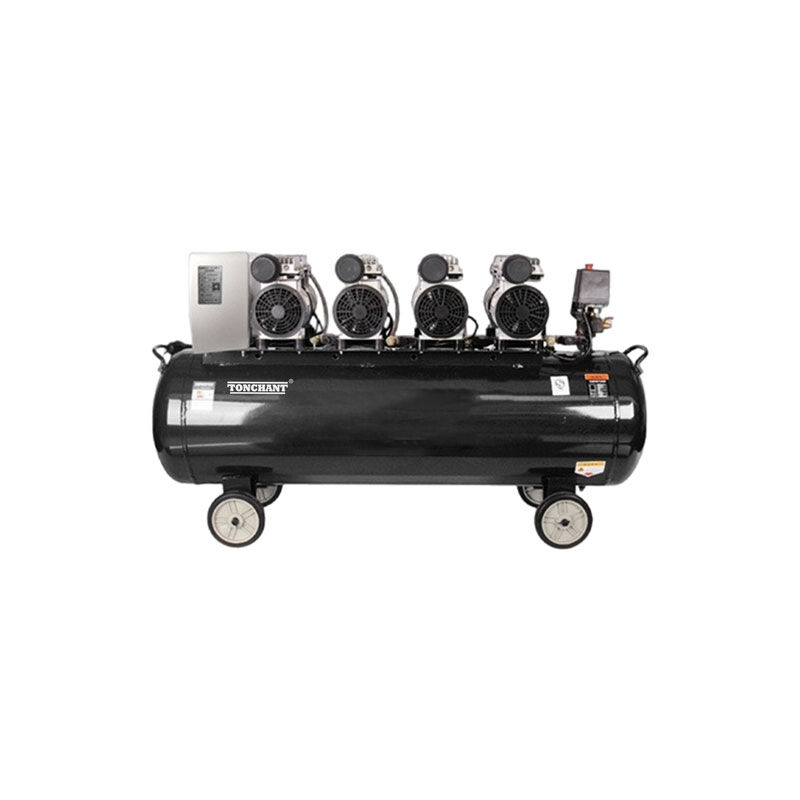
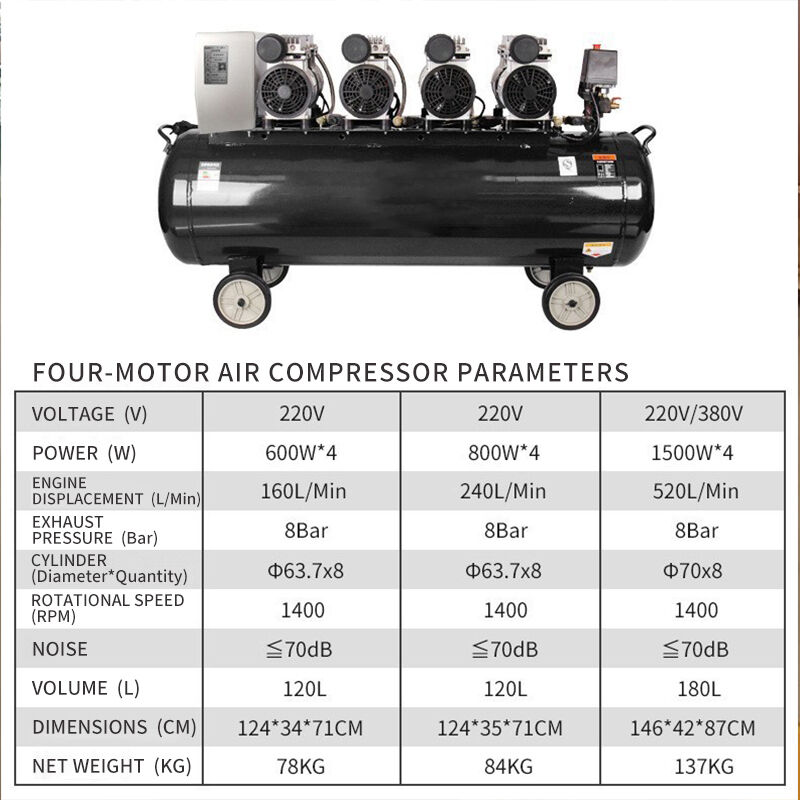
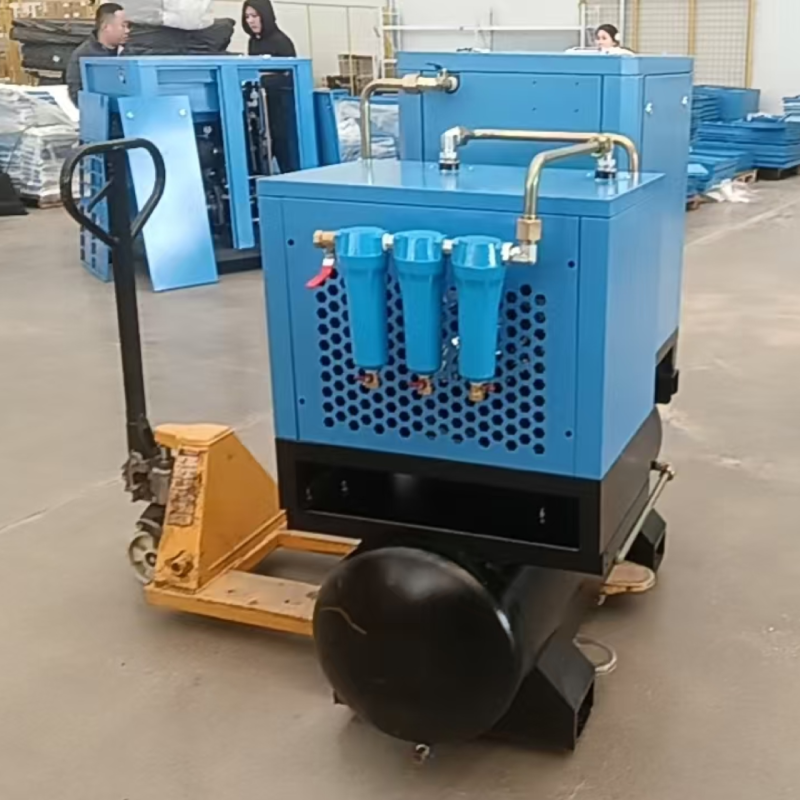
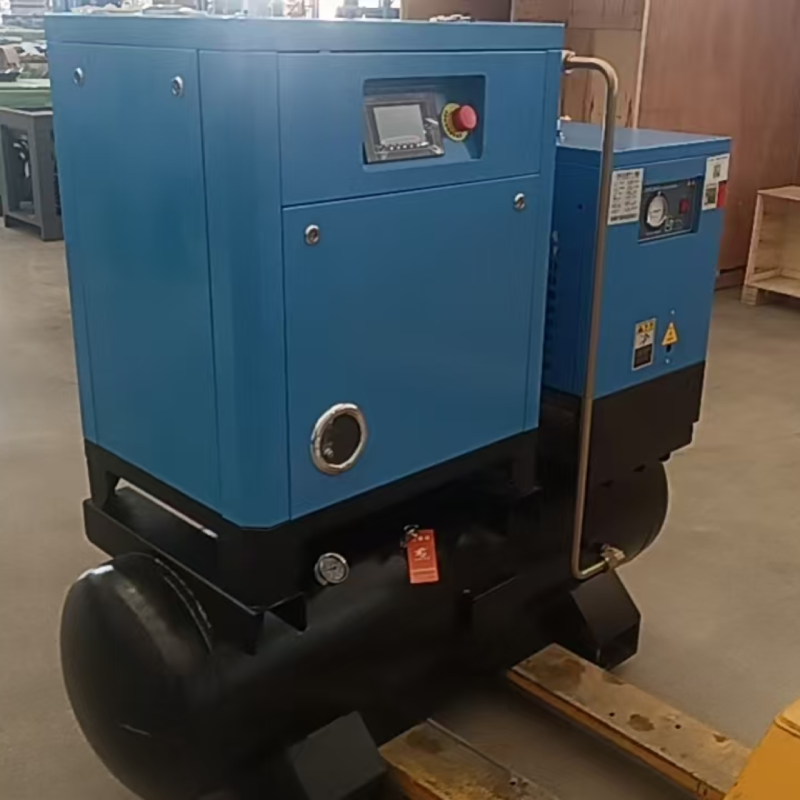
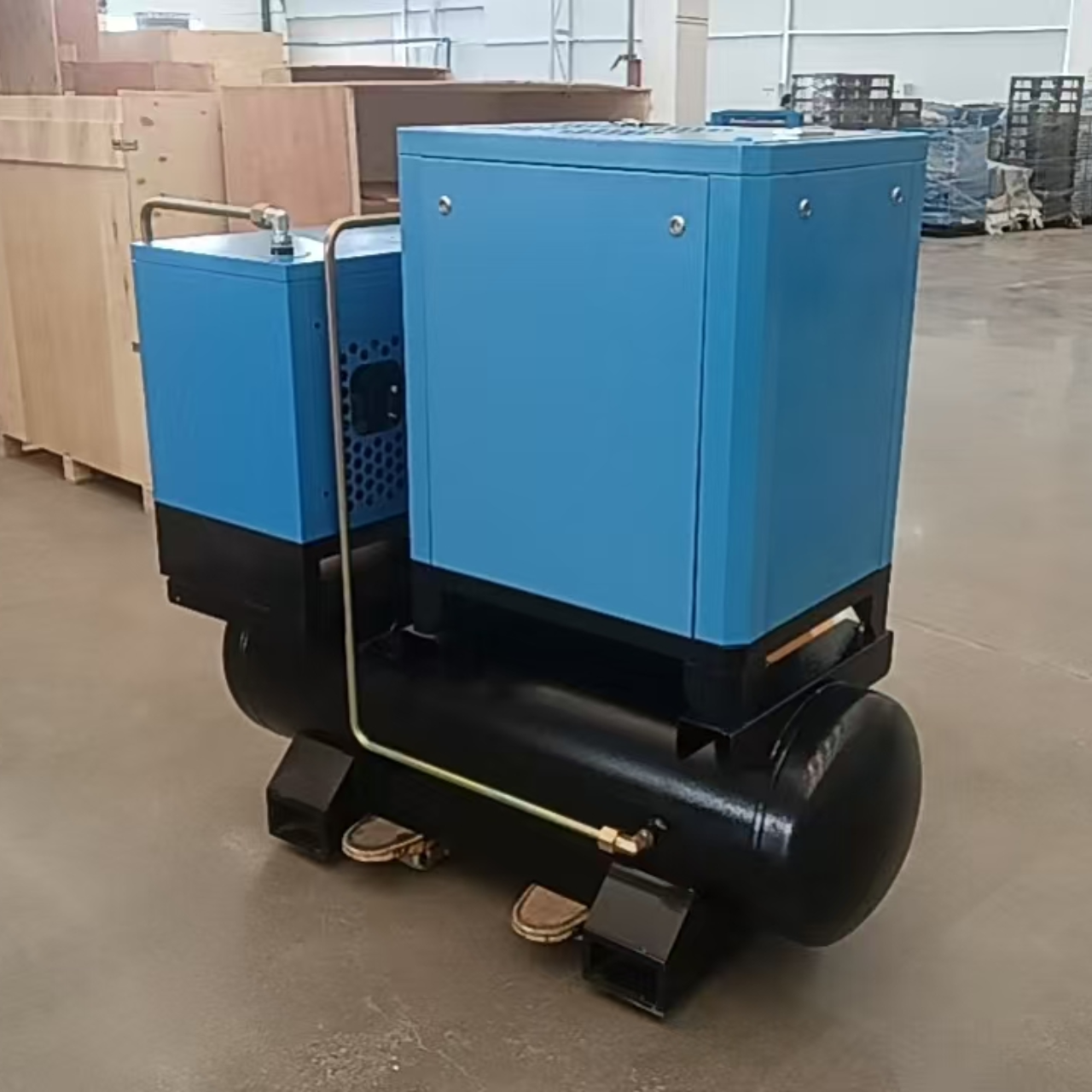
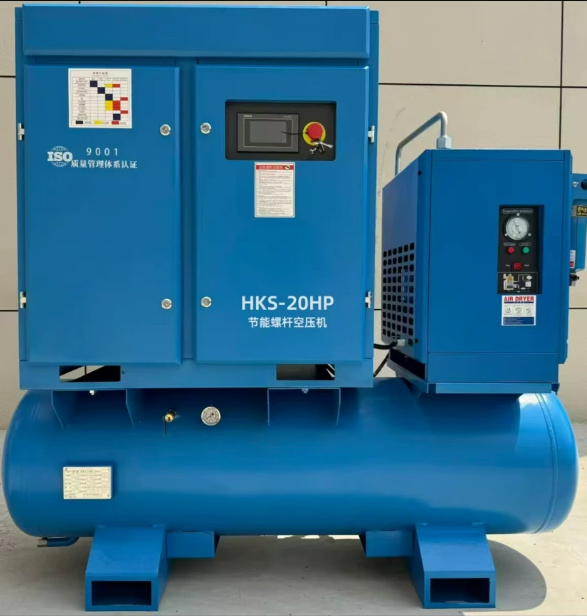
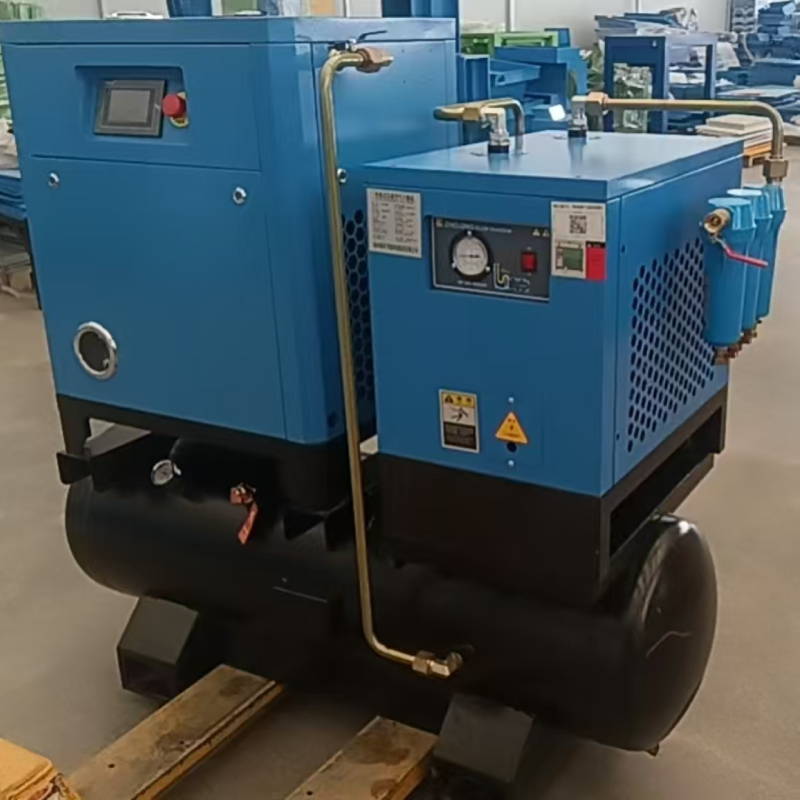
This air compressor is equipped with 4 motors. Its key features include low noise (≤70dB) and multiple power specifications to choose from, making it suitable for scenarios like industrial pneumatic tool supply and equipment air source provision. Specification 3, with a larger air displacement (520L/Min) and tank capacity (180L), is ideal for working conditions with high air demand.
| 4-Motor Air Compressor | |||
| Voltage (V) | 220V | 220V | 220V/380V |
| Power (W) | 600W*4 | 800W*4 | 1500W*4 |
| Air Displacement (L/Min) | 160L/Min | 240L/Min | 520L/Min |
| Air Pressure (Bar) | 8Bar | 8Bar | 8Bar |
| Cylinders (Diameter * Quantity) | Φ63.7×8 | Φ63.7×8 | Φ70×8 |
| Rotation Speed (RPM) | 1400 | 1400 | 1400 |
| Noise Level | ≤70dB | ≤70dB | ≤70dB |
| Tank Capacity (L) | 120L | 120L | 180L |
| Overall Dimensions (CM) | 124×34×71cm | 124×35×71cm | 146×42×87cm |
| Net Weight (KG) | 78kg | 84kg | 137kg |
Q1: What are the core specifications (power, air displacement, pressure) of this air compressor?
A1: It offers three specifications to choose from. Specification 1: 600W4 power, 160L/Min air displacement; Specification 2: 800W4 power, 240L/Min air displacement; Specification 3: 1500W*4 power, 520L/Min air displacement. All models have a rated discharge pressure of 8Bar, adapting to different air demand scenarios.
Q2: What are the advantages of the "4-motor" design compared to single-motor air compressors?
A2: The 4-motor parallel design achieves balanced power output and higher air displacement. It ensures more stable operation with lower vibration, and the independent motor operation mode helps reduce energy consumption when the air demand is low. Additionally, it has a longer service life compared to single-motor models under the same workload.
Q3: How to select the appropriate specification (1/2/3) based on actual needs?
A3: Calculate the total air consumption of your equipment first, including considering the simultaneous use coefficient (usually 0.6-0.9) and pipeline loss (5%-10%). For small workshops or low-demand tools, choose Specification 1 or 2; for production lines with multiple pneumatic devices or high instantaneous air demand, Specification 3 is recommended, with a 10%-20% margin reserved for future expansion.
Q4: What voltage options are available, and how to confirm compatibility with local power supply?
A4: Specifications 1 and 2 support 220V single-phase power, while Specification 3 offers dual options of 220V/380V. Before purchase, confirm the local power supply voltage, frequency (50Hz recommended), and load capacity to ensure the power supply matches the compressor’s requirements and avoid equipment damage.
Q5: How to handle common issues such as excessive temperature or insufficient pressure during use?
A5: For excessive temperature, ensure good ventilation around the equipment, avoid long-term overload operation, and clean the heat dissipation components regularly. For insufficient pressure, check for air leakage in pipelines and interfaces, replace aging seals in a timely manner, and verify that the motor is operating normally without phase loss or underpower.
Q6: What maintenance work is required for this air compressor?
A6: Regularly clean the air filter and surface of the equipment to maintain good heat dissipation. Check the tightness of pipelines and connections periodically to reduce air leakage. Inspect the condition of bearings and seals regularly, and replace worn parts with original accessories to ensure air quality and equipment life. Conduct pressure testing according to industrial safety regulations at fixed intervals.
You Might Also Like

 EN
EN