
 EN
EN


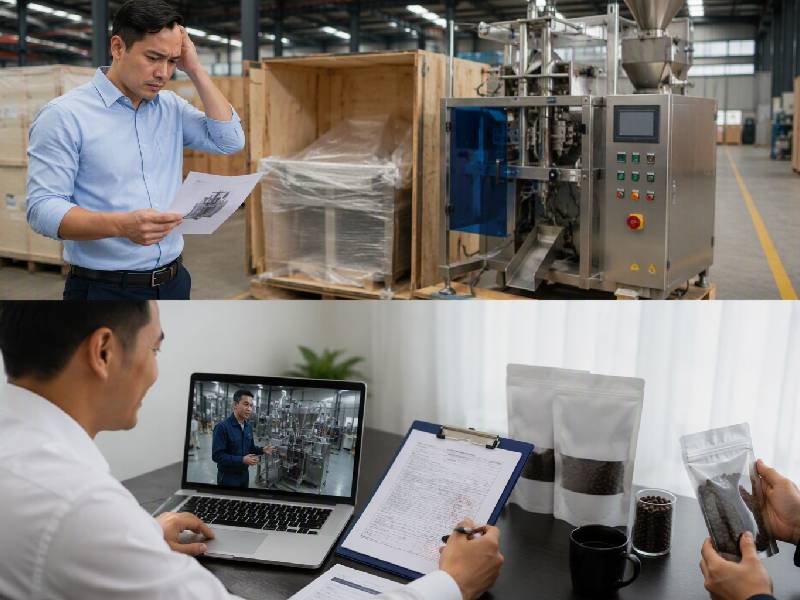
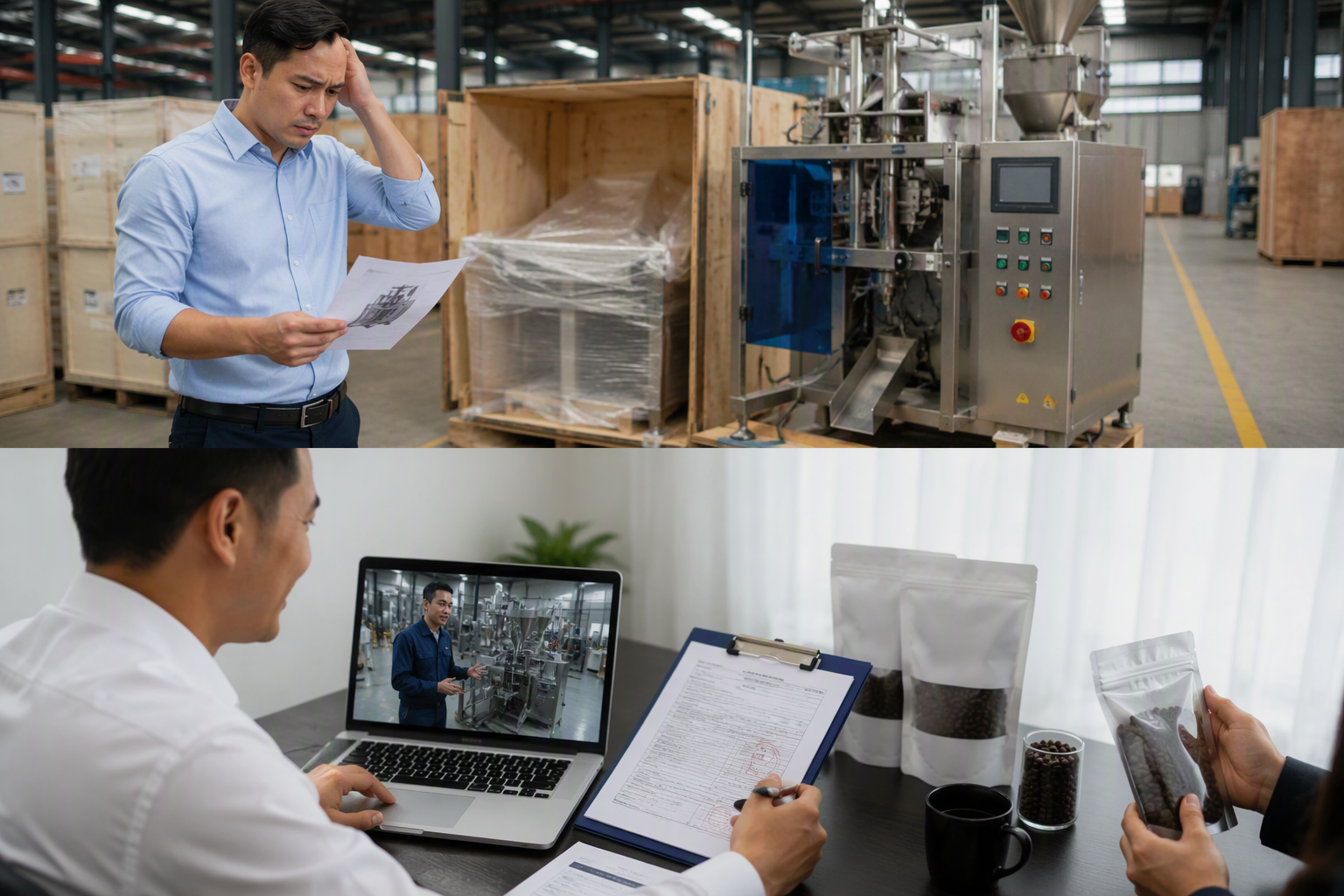
The story is repeated often enough in international procurement circles to be a cliché, but it continues to happen: a buyer places an order for a packaging machine based on a supplier's Alibaba listing and a single video call, pays a 30% deposit, waits two months, and receives a machine that does not match the specification agreed at order. The resulting choices — accept the machine, dispute the transaction, or absorb the cost — are all bad. Understanding the seven most common sourcing mistakes and how to avoid them is the most cost-effective risk management tool available to any buyer sourcing packaging machinery from China for the first time.
Mistake 1: Evaluating Price Before Specification
The most common sourcing error is treating packaging machinery as a commodity and leading the evaluation with price comparison. A packing machine at 30% below market average is almost certainly below market specification in a meaningful way — using inferior PLC components, underspecified servo motors, or reduced stainless steel content in product-contact zones. Price-first evaluation consistently results in either a machine that underperforms or a machine that fails early.
The correct approach: establish a complete technical specification first (speed, fill range, bag formats, sealing technology, material requirements), get like-for-like quotations from 3–5 qualified suppliers, then evaluate price against a verified technical baseline.
Mistake 2: Accepting CE Certification Claims Without Document Verification
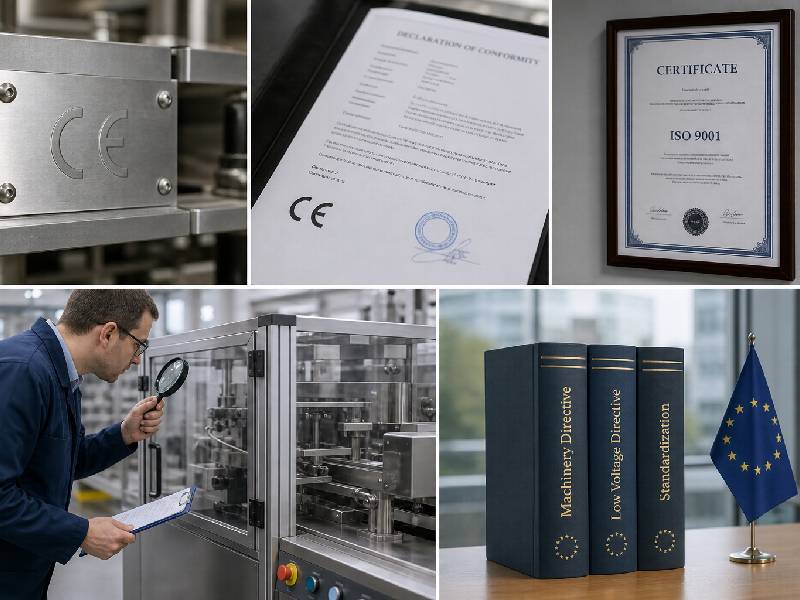
As discussed in Article 14, a CE sticker on a machine does not verify CE compliance. Request the original Declaration of Conformity and verify the specific directives cited.
Mistake 3: Not Specifying After-Sales Terms Before Ordering
Buyers frequently negotiate the machine price and specification in detail but leave after-sales terms — warranty period, spare parts policy, response time commitments — undefined until a problem occurs. At that point, the supplier's verbal commitments at the sales stage are unverifiable.
The correct approach: obtain written confirmation of warranty terms, spare parts availability commitment, and response time SLA as part of the purchase agreement before payment.
Mistake 4: Accepting a Machine Demo Without Your Product
A machine demonstration using the supplier's own sample material — or no material at all — tells you almost nothing about how the machine will perform with your specific coffee or tea. Product density, particle size, oil content, and moisture content all affect filling accuracy and sealing performance.
The correct approach: require a real-material test run with your actual product material, documented on video, before production payment is made. No credible manufacturer should refuse this request.
Mistake 5: Ignoring the Import Duty and HS Code Classification
Packaging machinery imported from China may attract import duties of 2–7% in most EU countries, and 0–3.5% in the US under MFN rates. An incorrect HS code declaration — either by the exporter or the importer — can result in customs delays, inspection fees, and retrospective duty assessments. The correct HS code for most coffee and tea packing machines is HS 8422.30 (machinery for filling, closing, sealing, or labelling bottles, cans, boxes, bags, or other containers) or HS 8422.90 for parts. Confirm the correct classification with your customs broker before shipment.
Mistake 6: Using the Manufacturer's Shipping Agent Without Comparison
Suppliers routinely offer to arrange freight on behalf of the buyer — a convenience that can cost significantly more than an independently sourced freight quote. For a machine weighing 300–800 kg shipped from Xiamen to a European port, the difference between a supplier-arranged freight quote and a competitive market rate can be USD 300–1,500.
The correct approach: obtain an independent freight quote from your own forwarder and compare before accepting the supplier's shipping arrangement.
Mistake 7: Not Planning for Installation and Commissioning
A packaging machine that arrives at your facility requires installation (mechanical leveling, utility connections), commissioning (initial setup and calibration), and operator training. Buyers who have not planned for these activities frequently experience 2–4 weeks of delayed production start after the machine arrives.
The correct approach: establish in writing with the supplier what installation support is included — video guidance, on-site support (if the supplier offers it), and the training documentation provided.
> Avoiding these mistakes starts with choosing a transparent, documented supplier.
> Contact Tonchant Pack for a fully documented purchasing process →
> We provide written specification, warranty, and after-sales terms before any payment.